
Can social media personalities “scale?”
Jan 31st
By Lori Witzel, {grow} Community Member
Social media can really benefit your personal brand. But how do you keep its most powerful value — the “one-to-one-ness” of social connection — intact when that reach explodes? The irony is, the more popular you become on the social web, the less effective you might be!
Here’s a story from my own life that illustrates the problem I’m talking about.
In 2005, I started my personal blog. I was posting photos, sketches, poem s— things that weren’t about marketing and had nothing to do with growing a business. I was amazed that people followed it (I didn’t do any of the things people suggested to grow a blog), and was even more amazed that my visitors came from all over the world.
Two of those new blog friends were from Perth, Australia. I got into a jokey comments war with another blog friend, Willie Baronet, about who most wanted to win a tin of Milo (a chocolate drink mix) from my friends in Perth. I won the contest, and gloated about it in the comments on Willie’s blog.
So far, so good. Some new friends, some fun, some chocolate. I was really liking this social media thing.
In fact, I enjoyed the experience so much I decided to ship my friends in Perth a surprise gift—all the fixin’s for a Tex-Mex party. Were they ever delighted!
They were so delighted, they decided to start a blog to foster people exchanging their local stuff around the world. It was called Gimme Your Stuff.
Notice they were inviting people to join in; a year later, they had 479 “cultural ambassadors” from 36 different countries. I couldn’t keep up, and neither could my Perth friends. I bailed out; shortly after, they found someone to take Gimme Your Stuff, we lost touch. Explosive growth + one-to-one social media = KABOOM.
Social media enabled me to scale—but I couldn’t make scaling work while keeping one-to-one connections intact as my reach grew.
The social marketer, exposed to those tools that enable social marketing to scale, has a similar problem.
Social media platforms like Twitter and Pinterest help people and brands “scale”—they enable (and can help automate) one-to-many connections, and can give start-ups the same impact and presence as established companies. Tools like HootSuite and TweetAdder further enable social scaling, by making it easier to manage and grow social reach.
You see where this is going, don’t you?
Social media thrives on vibrant one-to-one connection (part of why I keep coming back to Mark Schaefer and the {grow} community.) It can build communities among those with shared interests, and link the victims of disasters with those who can share their stories and get them aid.
The dilemma: how do we balance personal connection with the very scalability that makes social media marketing so powerful?
The upside for the broad-reach social marketer is huge potential top-of-the-funnel metrics, which look great for potential Return on Marketing Investment. And if you use tools like the Salesforce Marketing Cloud, you can get insights into your brand’s social communities that help you hone campaigns.
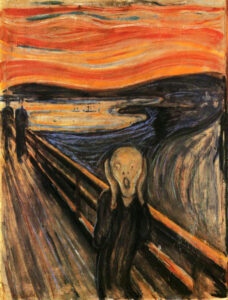
As you scale up, however, you may struggle with KABOOMs arising from the lack of real person-to-person connection. The “Kaboom Effect” on a brand can be huge.
Hashtags can get hijacked by angry customers (see what happened to McDonald’s #McDStories here). Social “charity-promo” efforts can make for spectacular fails (see Bing and its donation effort here). KABOOM!
While one-to-one social efforts may cause one person to fatigue, or to net an occasional troll, the sheer size of enterprise-scale social media marketing means scalability adds an equivalently super-sized “Kaboom Effect” risk.
That said, I think as social marketers we’re very fortunate. Through the personal connections we make across platforms like Twitter and this blog, we “get” that we are all in this together. And knowing the risks of increasing social scale, we can advise our employers and clients in sensitively managing their companies’ social streams.
This is something every social marketer has to think about. Can you scale your personal engagement? Or, are you going to suffer from the “Kaboom Effect” like my friends and I did?
Lori Witzel is a Demand Generation & Content Marketer based in Austin, Texas. She creates whitepapers and similar content, and consults on demand generation programs. Lori blogs on marketing at Haunted by Marketing.
There will be no social media apocalypse
Jan 30th
I like and admire Erik Qualman. I’ve met him a couple of times and he is a fellow author at McGraw Hill. He is a kind man, a legitimate intellect, and one of the top speakers in our field.
His insanely popular series of fast-paced “social media revolution” videos have been viewed millions of times and are standard fare to kick off a social media class or workshop. In under four minutes, these catchy factoid machines impress upon the viewer the power and importance of our society’s digital transformation.
But there is one “fact” that Erik has included in each version that makes me cringe:
“The ROI of social media is your business will still exist in 5 years.”
If you would believe Erik, we are on the cusp of a social media apocalypse. Without Facebook, Twitter and the all-important “listening,” we would expect companies to start going “poof” during the impending social media rapture event.
Ironically, Erik’s first video with this quote was about five years ago … and there has been no such end of the business world. Miraculously there are still plenty of businesses that don’t even have a Facebook page that are somehow making lots of money. Like Apple.
Let’s not sell fear
Certainly the digital revolution is real and any smart businessperson must consider the consequences and adjust. But adjusting to your changing competitive environment is just smart business and it always has been.
Business success is about far more than having an active Twitter account. A common problem I see is that businesses and many consultants peddle this fear and a notion that the lack of a social media strategy is a sure sign of doom.
In fact, that may be the least of their worries.
Let’s not lose sight that businesses need to identify and execute upon a sustainable point of differentiation, perhaps in a global marketplace. They need to create products and services that brilliantly address unmet or under-served customer wants and needs. They need to constantly adjust and innovate. Successful businesses need to manufacture their products through an efficient and reliable supply chain with consistent quality. Customer service levels need to meet or exceed customer expectations. The company needs to attract and retain the talented employees that will sustain the success of the enterprise.
And then we can talk about Facebook.
Social media does not assure business success
When social media gurus point to success stories, Dell Computer is always at the top of the list. Yet the company’s stock is at a five-year low. Let’s keep in mind that it takes a lot of moving parts to create business success and having an effective social media strategy is neither profitability pixie dust nor an insurance policy against demise.
I think the point that Erik tries to make — and I do agree — is that without considering digital relevancy, a company will be vulnerable. Today, it’s negligent to dismiss the digital revolution. I just think there is a better way to get that across than hyping doom.
What do you think? I’d love to hear your thoughts in the comment section.
Illustration based on art from BigStock.com
Why Human Competition is the Least You Have to Fear
Jan 29th
By Mars Dorian, Contributing {grow} Columnist
This headline may seem like a hoax, but I assure you, it’s not.
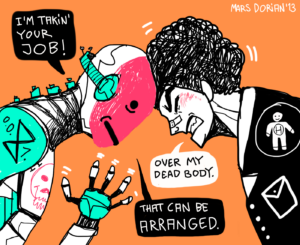
We all know the times are changin’, but most of us don’t realize what those changes mean to YOU and your career. We also know that competition is on steroids in the online age, but most of us think only about human competition. But it’s not humans you have to rival, but artificial agents, also known as robots.
Heh.
I can read your thoughts already – yeah, yeah, that’s some fun sci-fi you gobbled up there, but that won’t replace ME because I’m unique / incomparable / one of kind / or whatever one gloriously thinks of her/himself.
Impossible? Let’s look at where technology is today:
- Google launched the driverless car. In the near future, you may not need a driver’s license because you’ll never have to drive again. The car is first on the automation control list, ships and aircraft will be next. Wait for it.
- Philip M. Parker, a professor of management science in France received worldwide coverage. Why? Well, he used a robotic algorithm to write and upload over 200,000 (!) eBooks to Amazon. Talking about prolific writing. Granted, it’s not Shakespeare yet, but if a robot can already write correct reports, how long till they create your content marketing plan?
- According to this short CBS documentary about robotization, we’re beginning to see robots (yeah, real robots) entering the workforce. The short feature includes two renowned MIT professors who predict that robots will completely replace every job known to mankind by the beginning of the next century.
- In this three-part series from The Associated Press, experts warn that if you add up all the jobs that technology (like robots) can take, the world is going to see unemployment on a scale that we haven’t begun to imagine. The article quotes software entrepreneur Martin Ford, who foresees a computer-dominated economy with 75 percent unemployment before the end of this century, and questions whether human beings will have anything left to do as robot and computers get smarter.
Boom.
Still think you’re irreplaceable? That’s also what horse sellers thought when Henry Ford introduced the first affordable automobile to the general public. They probably laughed their hooves off.
Yeah, I think we all know how that story ended.
Listen – technology has already put a death strike on many businesses- especially the traditional media. Book publishers and newspapers have to face extinction if they don’t adapt. But it’s not just the big corporations that have to adapt, you have to, too.
The more replaceable and “mediocre” your service and offer, the easier and faster you will be replaced by an algorithm / app / software that does the job better than you at a fraction of your cost.
But hey, I don’t want to paint the future black. There’s a lot of opportunity before the robots (mis)use us as human batteries and trap our minds in a virtual reality version. What other people see as crisis I see as opportunity. (BTW – the Chinese symbol for “crisis” consists of the signs “danger” and “opportunity,” and I want to focus on the opportunity part.)
If more and more of our work can become replaceable, what can you do to stay relevant?
Here are my top tips that I obsessively follow myself:
Define your edge and go there.
If you create work that’s easy to replicate, you will attract copycats. And if a human can copy your style / tactic / method, so can a robot algorithm. Bad for business. Baaad for you.
You want to make it challenging to replicate the value you give, and that’s why you have to go the edges your competition isn’t willing to approach. You should do something extreme with your biz that makes it stand out. I for example will include more and more images and graphics into my online presence – creating a color-bombed visual marketing blog experience you haven’t seen before.
I believe: Over-the-top in your market shouldn’t be a one time thing, it should be your mantra.
Creating caring connections.
Business is made of humans. No matter how technical it gets, it’s still about humans serving other human beings, at least in this century.
Your network is your only job security – the more and better you’re connected with people from around the globe, the more opportunities will arise. I currently get 70% of my work through referrals and recommendations. Am I the only one that can solve their problems? No. But because they know me through a common friend they trust, they automatically trust me. And trust can lead to collaboration. Eventually.
If you offer value with your service and you create heartfelt connections, word-of-mouth will bring you work. No robots required.
Make art and change your client’s life.
Making art is the opposite of creating a commodity. That’s why bowling is so boring – it’s limited by a perfect score people can reach, which means getting good at it is no big value. Not so with “art.”
In essence, making “art” means creating value that’s hard to put a number on. You can feel it, but you can’t compare it. It’s unique.
You’re touching a human (and remember, all business is still about humans ) in a way s/he hasn’t been touched before. And I don’t mean in the dirty sense.
It can be your personality, your enchanting customer service or something else that only YOU can bring to the table. Drop the corporate speech. Lose the artificiality. Infuse the human touch. And when you make customers emotionally glued to you, there’s no need to fear a C3PO taking away your job. At least for now.
Conclusion:
The robot revolution won’t come in the form of Terminators with German-Austrian accents that annihilate you. Noooo. It will quietly creep into your life, eventually replacing you if you’re unwilling to adapt and make your work emotionally-essential. Maybe it’s already happening. Prove that you’re human and make “art” work that only you can make.
What do you think?
Mars Dorian describes himself as a creative marketeer with a moon-melting passion for human potential and technology. You can follow his adventures at www.marsdorian.com/
Original illustrations by the author.
The challenge of creating a blog that sings
Jan 28th
As I write these words, it is 5:36 a.m. on a Saturday morning.
Am I crazy?
No, I’m excited. After spending a week focused on consulting, teaching, and speaking projects, I finally have time to devote to this marvelous creative outlet, this opportunity to connect with you, through my blog. When I finally have that quiet time to write, I am ready to LEAP to that keyboard and create.
This is also the enigma, and perhaps greatest challenge of blogging … at least for me, and I suspect for most of you. How do you stay fresh and allow time for a creative process when you still have bills to pay? How do you hold down a job and create a blog that sings?
I attended a fascinating lecture this week that really pinpointed this problem for me. I spent about two hours listening to a person who is on the opposite end of the creative spectrum.
Creative immersion
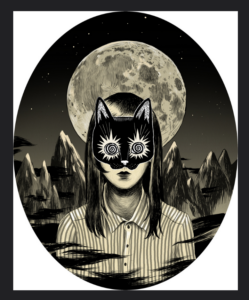
Jena Serbu is creative for a living. She works on dark, surreal paintings. Jena sculpts. She writes plays and movie scripts. She directs, produces and edits films. She combines all of these talents in stunning music videos. Her latest art project is mailing 365 post cards to friends and strangers she plucks from the phone book.
Jena has the rich and rare opportunity of being completely immersed in her creative journey every minute, every day. She leaps from project to project and idea to idea in this seamless frenzy of activity. I’m not sure where the money comes from to support all this, but I know that in part, wealthy patrons provide grants and residency programs that allow her to live in the journey, instead of aiming at a financial destination.
I felt jealous. Wouldn’t it be amazing to have a chance to simply create without concern … even for a few weeks?
You and I do not have the luxury of submerging ourselves in a constant creative journey. To create my “art” on this blog, I have to work from point to point, grabbing time whenever I can (even before dawn on a Saturday!) if I am to unleash my ideas on the world.
To block out the extended time necessary to write a book, I have to take a serious short-term financial hit to my business.
Creating is a luxury
Creating art is a luxury. It’s way up at the top on that Maslow Hierarchy of Needs chart you studied in school. First you have to find a way to eat, take care of your family, and pay the bills before you can dabble in a creative process.
And while blogging is important to my business (and yours!) it is, in fact, a highly creative endeavor that is not unlike composing a little song or making a video. My son is in the music business and we often compare notes on the very similar creative processes we experience.
The problem is, it’s pretty darn challenging to be creative on demand, to be limited by a “point to point” creative process. We have to squeeze our art into the edges of the frenzied demands of life … after that last customer phone call, after mowing the yard, after putting the kids to bed,
So to all you weekend bloggers out there, I want to thank you, encourage you, and give you a virtual round of applause. This is hard work, isn’t it?
But I am also realizing that even if I cannot be a continuous creative buzzsaw like Jena, I still have to find time for random inspiration, playfulness, and new conversations that lead to creative insight. Short of finding a wealthy patron for my blog, I am going to have to actually “schedule” creative exploration as a business activity! This is the entry fee for a seat at the blogging table these days, I’m afraid.
Can I pull this off, or will I be drawn back into the daily hurricane every time I try? Time will tell. But I would be really interested in hearing about how you are handling this. My fellow bloggers and artists … how do you run a business, run a life, and still find time to create your beautiful song?
Top illustration: Still frame from the music video “Whether.” Song by Julia Othmer, video directed by Jena Serbu.
Side illustration: Artwork from Ippise Jones book series by Jena Serbu.


You’re in marketing for one reason: Grow.
Grow your company, reputation, customers, impact, profits. Grow yourself. This is a community that will help. It will stretch your mind, connect you to fascinating people, and provide some fun along the way. I am so glad you’re here.
-Mark Schaefer