Jason Falls discusses publishing partnership
Apr 3rd
Click here if you can’t see this interview with Jason Falls.
Many people dream of writing and publishing a best-selling book, but few earn the opportunity. In this video interview, first-time author Jason Falls talks about how he overcame resistance to writing a book, selling his controversial title (No Bullshit Social Media) to his publisher and the delicate challenges of working with a co-author, Erik Deckers. Most interesting I think is Jason’s take on what he learned about himself and social media through the process.
A great opportunity to learn from one of the keenest minds in the business. Enjoy!
Link to Jason’s book is an affiliate link.
This is why you must use Twitter
Apr 1st
If you’re like me, you probably hated Twitter when you first tried it. The first tweet I ever received was “It’s 4 a.m.” – confirming this was the stupidest idea ever!
In fact, it took me months to “get” it and unless you’re immersed in this platform, it’s pretty difficult to explain to another person. If I told you Twitter helped keep you safe, would you believe it? What if I told you it was an agent of peace and global connection? A way to help students? Solve tech problems? Networking on steroids?
Instead of SAYING these things, I wanted to SHOW you. Here is a snippet of my life over the past few weeks as seen through the lens of Twitter …
Two weeks ago, we had a line of dangerous storm cells and tornadoes marching through our area. As the fierce winds arrived, we lost power and all communication … except for Twitter. I was able to see reports from local friends on the status of flooding and damage in the area. A tweet from my friend Katie Granju suggested an NOAA emergency weather center iPhone app which broadcast radio news during the storm, which I downloaded immediately.
Through Twitter I have connected to hundreds of inspiring people from around the world but none perhaps as loyal and dedicated as a young man named Muhammad Saad Khan, who is using Twitter and the social web to learn about social media from his home in Karachi, Pakistan. This week he tweeted along to a U.S. Youth Forum broadcast from Korea. He could not obtain a copy of my book in Pakistan, so I sent him one. When he received the book, he made this Facebook post (along with six photos of the book):
Twitter was essential to cutting through the chaos at SXSW. This is how I learned of impromptu events, met up with friends, and found the best parties and free food. One of the best things that happened was meeting up with a long-time Twitter friend Nicole Fletcher of San Diego. We toured the trade show together and we learned from each other as I assessed the marketing potential of each new idea we saw and she evaluated it from a technical perspective.
Among my first Twitter friends were Billy Mitchell of Atlanta and Amy Howell of Memphis, who have become close personal friends in real life. At least once a month it seems we turn up some business opportunity for each other. This week I did a webinar on social influence for Billy and Amy invited me to do a blogging workshop with her clients in Memphis. Without Twitter, how would I have ever met these dear friends and business associates?
I had been struggling with a problem with my blog RSS feed for a week. I asked for help over Twitter and quickly found a resource that had the problem solved in an hour.
This week I have been very busy preparing for the amazing Social Slam event we will be having in Knoxville TN, April 27. This is a conference created entirely through Twitter. Every single speaker (including Mitch Joel, Gini Dietrich, Jay Baer and Tom Webster), as well as event volunteers came together from Twitter. We’re expecting 600 people from as far away as Texas, Colorado and California. How did they hear about the event? Tweets, of course! We’ve spent zero on advertising.
I have been really busy and overlooked the time that my favorite college basketball team was playing in the NCAA tournament. Luckily I saw a tweet about the game to remind me to turn on the TV.
Through Twitter this week, I received several requests from students for interviews that would help them with their end of the semester projects. I was happy to connect and help them.
I met a new Twitter friend a few weeks ago named Tony Dowling. He learned of my Tao of Twitter book, became a convert, and wrote an amazing blog post about his experience. He is gathering a powerful tribe in Wales and I suggested that he create a Welsh social media conference. Well, he’s done it and I will be on my way to Wales in September as their keynote speaker! I’m also speaking in London in two weeks and will be meeting with dozens of great friends who have connected with me over the years. A Twitter connection asked me to speak to her class at Oxford while I’m there, which will be an awesome experience.

I could go on, but by now I hope you’re starting to see the diversity, usefulness and fun of Twitter. If you’re just starting out, hang in there. It will work! And if you’ve been around awhile, what is your favorite Twitter connection story?

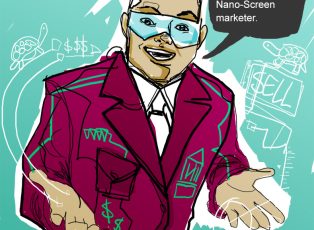
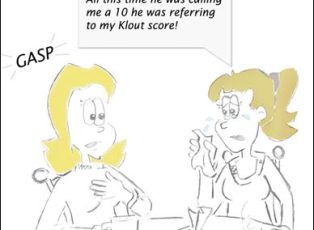
Faith In Numbers. A {growtoon}.
Mar 30th
Join the growtoonists each Friday for a humorous take on marketing, social media, and current business events.
Kacy Maxwell is a guy who loves his work, family and a good challenge. See more of his cartoons at EverythingIsMedia.com.
How does social media affect trust and your brand?
Mar 29th
By Contributing {grow} Columnist “Social Steve” Goldner
You want successful social media marketing for your company or brand? Think “Trust Marketing.” You can say you heard it here on the {grow} blog first.
In 2009, Chris Brogan and Julien Smith released their book Trust Agents. This book focused on trust as it relates to influence. In other words, brands need to identify the people that they want on their side. This is extremely important and digital influence and outreach is a key service that I provide in the social media practice I head up at MediaWhiz.
But I am talking about something different here. Brands need to work on building their own customer trust as well. When you look up the meaning of trust you’ll see it is defined as “reliance on the integrity, strength, ability, surety, etc., of a person or thing; confidence.”
Stop and think of your brand’s position. What do the people inside your company say … and what is the actual perception outside of the company? Trust Marketing is about delivering “integrity, ability, and surety” on your brand position. Trust Marketing is also about enhancing the customer experience such that your customers have “confidence” in your brand.
So how does social play into the scheme of Trust Marketing? Social media presents the opportunity for a brand to reinforce what they are about. Take your brand position. (I hope you and everyone at your company know specifically what it is.) Is that position reality or just some well crafted advertising slogan? In today’s digitally social world, everyone knows the difference between the two and many talk. Does the social voice and what people say in the digital world support your position as defined by your company or negate it?
I’ve mentioned the following a number of times on my SocialSteve Blog … I once had a boss that said to me, “Steve, you’ll be no good in marketing. You are too honest.” That always motivated me to work with the product team to deliver the best damn product our target segment could get. To deliver meaningful and differentiated value and benefit. Then, market and promote the brand and the value the brand delivers to its customers. This is the essence of a solid marketing foundation.
As a marketing executive facing a world of massive digital participation, I see greater opportunity for marketing to be an important aspect of changing customer behavior to drive transactions. Social media provides strong channels to continuously communicate the important attributes associated with your offering and quietly align your brand with those factors important to your audience. This is the distinction between advertising marketing and trust marketing.
I always think back to a marketing effort that is often used in B2B — the production of a “white paper.” A white paper is an informative two- or three-pager that states a problem and then a solution for a problem. The problem it addresses is typically one that is often experienced by the brand’s target audience. After the solution is stated, the communication softly states “if you are experiencing a similar challenge, talk to one of the representatives regarding how we can help,” or something similar in nature.
I suggest the same guidance for Trust Marketing. Use your social media channels to consistently deliver value to your audience. Address issues that are prevalent to your audience. Do not use your social media channels to sell, but continue to associate your brand with the advice and information you provide. The mere relationship between the content you provide and the identity of your blog, social network, community, Twitter, etc. is the opportunity to reinforce what your brand stands for. It is a long term effort. You need to emphasize knowledge of issues and prove you can provide benefits and solutions. This creates a trust between brand and customers.
If you want to produce a strong brand-customer bond, one that goes well beyond a single purchase transaction, start to think about the activities to engage in building a strong trust. Think Trust Marketing.
Steve Goldner is the Senior Director at MediaWhiz where he leads the social media practice. Steve has been a marketing executive for the past 20+ years and engaged in social media for the last four. You can follow him on Twitter @SocialSteve and visit his blog at http://socialsteve.wordpress.com
Illustration: “Trust Me” a very cool art installation by Steve Lambert


You’re in marketing for one reason: Grow.
Grow your company, reputation, customers, impact, profits. Grow yourself. This is a community that will help. It will stretch your mind, connect you to fascinating people, and provide some fun along the way. I am so glad you’re here.
-Mark Schaefer