Blogs on auto-tweet and the new world of Triberr
Jul 14th
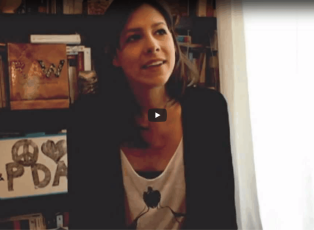
I had a chance to catch up with Dino Dogan, an irreverant blogger, co-founder of Triberr, and one of my most consistently interesting Twitter friends. I think you’ll enjoy this video!
If you don’t know of Triberr, it has become a popular, yet polarizing, method for bloggers to share their blog posts on a large scale. Some people hate it. Some people love it.
My view of Triberr is somewhere in the middle! I’m still looking at it but it probably isn’t going to help me meet some of my long-term blogging goals like it would for a new blogger just on the scene. I concur with Erica Allison when she wrote that Triberr can work against community engagement, a problem Dino has noticed too. People seem to be pulling back from the auto-tweeted posts they may never actually read.
I’m also wondering about how Google is viewing this sudden surge of tweets from a Triberr URL.
So there are some problems to iron out but Dino probably has the energy and vision to figure it out.
Are you using Triberr? What do you think?
Are we killing our customers with engagement?
Jul 13th
By Neicole Crepeau, Contributing {grow} Columnist
Facebook is seeing a decline in use. Studies show that users are un-Liking business pages. Consumers are getting savvy and more jaded about businesses use of social media—and they’re responding negatively. The thing is, it’s our own fault.
Social media consultants and bloggers have long urged companies to create Facebook pages and Twitter accounts and start a conversation with their customers. So, lots of companies have done just that. The problem is, most customers don’t want a conversation with a company or its representatives.
Sure, there are exceptions. There are customers who are genuinely passionate about a restaurant, a hotel, a clothing line, or shoe company. Those customers are a minority, though.
It may be worth engaging that minority deeply, as brand advocates. But companies aren’t focusing on deeply engaging with the few people who deeply want to engage with them. Most companies either aren’t doing social media, or they are in a race to acquire as many fans and followers as possible and then get likes and comments from as many as possible.
As I noted in my recent post, If You Want to Engage Me, Make Me Look Good, the conversation approach ISN’T customer-centric. It’s the business, the marketer that wants to engage in conversation with the customer. Just as marketers want blog and newsletter subscribers, and want customer email addresses, they want Facebook fans. They want to be able to regularly contact and message leads and customers—even if they do it in a less promotional, more sociable manner.
Customers aren’t beating down the doors of businesses begging them, “engage with me, please!”
Customers want to engage with their friends. They want to engage with content that amuses, teaches, or inspires them. They may want to engage with their friends about said content.
Don’t get me wrong. I’m not saying that companies shouldn’t listen to customers and respond to them. Good companies have been listening to their customers for years, in the ways available at the time. Good companies will continue to monitor, respond, answer questions, address concerns, elicit suggestions, all through social media as well as other means.
It’s the inane and sometimes manipulative attempts to converse and engage people that I’m decrying. With all the competition for our attention, the flood of content and news and status updates, I think consumers increasingly resent attempts to draw their attention with questions, content, contests, and conversations that aren’t valuable, relevant, fun, or interesting. It’s just more noise.
We’ve created a monster, by telling every company that they NEED a Facebook page and Twitter account and that they need to converse and engage. I’m hoping we can slay that monster by taking a truly customer-centric approach. I hope we begin to tell companies that they need to identify the specific consumers of value to them as a company, and then find a way to be OF SERVICE to those consumers. I hope companies will find ways to serve the customer’s goals online. Find ways to facilitate the conversations those consumers want to be having with their friends. Find ways to entertain and inspire them. Find ways to let consumers take the actions that help them personally or professionally and that enrich their online lives.
So many businesses now are out on the social web expending resources and money trying to get a conversation started on their page and blog. What if they were all spending the same resources and money trying to find valuable ways to serve consumers through their Facebook pages and blogs, ways to help consumers meet their own online goals and enrich their own relationships with one another. If a company did that for me, I’d be a loyal fan and I’d be visiting their Facebook page more often.
Do you agree?
Neicole Crepeau is a partner in Coherent Interactive, which specializes in web, mobile, and social media design and implementation for small and mid-size businesses. You can read more of her original material at her blog, Coherent Social Media or onTwitter where she is @neicolec.
Turn the beat around. Let’s blog upside down
Jul 12th
I’m asked to review a ton of blogs. Some of them are pretty sorry. But with just a few little tweaks, they could be really great. Here are the three biggest beginner blogging mistakes I see every day …
1) Blogging upside down.
When most people tell a story, it’s linear. There is a beginning, a middle, and an end. Problem is, people who read blogs have ADD. They are not going to wait until the end to get to the punchline. You have to give them the punchline first and THEN tell them who, what, when, where and why. Turn your blog upside down!
In journalism school they used to call this “burying the lead” — making readers work for the main point of the story. Most blogs can be improved by wiping out the first third of the story. Have the courage to put your blog under the knife.
2) Length matters
I have a theory about building a blog community. You have to earn the right to go long. The more credibility you have, the more time people will stay on your blog. If you are just beginning, new readers are going to give you just a few moments to make your case — if you’re lucky. If you’re Malcolm Gladwell, you can write 10,000 words without a care.
Respect your readers and their precious time. Get in, make your point, get out.
3) Grab them hard
Headlines are the most important part of a blog. Without a scintillating, compelling, tweetable headline, your hard work will never see the light of day.
Here is a bad headline: “My biggest blogging challenge.”
Somebody set the alarm to wake me when it’s over. It might be a GREAT blog, but the headline is just a snoozer. Plus it can’t be easily tweeted. When you use the word “my” it will look like it is the tweeter’s biggest blogging challenge, not yours.
Headlines are among my biggest struggles too. I’ll work hard on a post and then have no idea what the headline should be. I tend to give myself a headline deadline. At some point you have to push that publish button and get on with your life.
Today is a perfect case study. I could have gone for the obvious “Three Ideas to Make Your Blog Better.” This would have been a safe bet and it would have received a lot of tweets because when you put a number in the headline, it’s usually a hit. But I just hate settling for the ordinary. If you’re going to commit to providing insanely great content, eschew the obvious. Take some risks.
I was captivated by the “blog upside down” notion. Then this little rhyme got stuck in my head, “turn the beat around” – which sounded like a disco song. So I found a disco picture to go with it. Is it insanely great? No. Honestly, it doesn’t even make sense. But at least I’m trying to push it out there just a little bit further!
Here’s something I think about. If headlines are so important … maybe we should write the headlines first? Anybody do that?
How are you working through these obstacles? If you had to add a fourth item, what do you struggle with? Join the blogging boogie in the comment section, won’t you?
Does +K affect your Klout score? (and other juicy Klout nuggets!)
Jul 10th
I’ve been wondering about this new +K function on Klout — an ability to reward people for their “influence” on certain subjects. In fact I thought the development was somewhat disturbing because it seems to invite people to game the system.
I know a lot of people hate the idea of being rated on Klout but I am sincerely impressed by the way the young company is pursuing a disciplined and rigorous approach to creating a constantly-improving approximation for influence. It’s far from perfect, but I give them props for focusing on the right thing — improving their algorithms by investing millions of dollars in technology and PhD-level resources.
So why in the world would they open themselves up to be gamed with this new +K thing? I am already seeing people ASK to be awarded +K points in hopes of raising their score as they seek valuable new Klout Perks.
Well, as it turns out, the +K designation is fairly meaningless at this point. I asked Klout co-founder Joe Fernandez about this innovation and here is his answer:
“The +K award does not affect your Klout score,” he said. “We put it out for a few reasons – to drive engagement and to help build-out our models around topics.”
Joe compared it to a personal “like” button to reward somebody for a job well done. “If I came to Knoxville and you recommended a restaurant to me and I went there, I should be able to give you a +K to acknowledge that. Or if I’m sitting at a conference and listening to a panel where somebody is making amazing points I never thought of – I should be able to give them a +K and reward them. That’s the idea.”
Joe did not discount the possibility that +K points could play a role in assessing influence. “We would not dismiss the possibility that it might be factored in some day, but the integrity of the score is so important so we would have to take baby steps. When we put the +K feature out, we didn’t even know if anybody would use it or what would happen. We’re analyzing the data now. Everything we look at is user-generated content, no different than a re-Tweet. We have to just be smart as to how we include +K– if it ever gets included at all.”
Here are a couple more Klout score nuggets I learned from Joe:
Influence of multiple platforms –While Klout is only connected to a few social media platforms today, it may be integrated with dozens in the next few months. Being spread thin across these networks does not necessarily help your Klout score. “As far as somebody being on three social networks versus 50, we’re network agnostic,” Joe said. “So if you’re just on Yelp or Twitter or Facebook, you could have a higher score than somebody who has a little influence but on more social networks.”
The factors of influence — Klout’s official blog names 35 different factors being considered when weighing on influence but that list is already climbing as the company learns more about the nature of online influence. “We are constantly adding factors,” Fernandez said. “I’m guessing we’re over 50 now. Our science team of 10 people — that’s their job every day to refine that and make it better. As we moved from Twitter to other networks, we would have these debates internally about is a Facebook Like equivalent to a Twitter RT … sort of like a currency exchange question! We came to the conclusion that all of these networks are different so every network must have its own ground-up influence algorithm. We have another algorithm that combines the scores for you — not generically for everybody. So, if your most effective platform is Facebook, it will take up the bulk of your scoring and everything else is added in. I think the algorithm will be hundreds of data points or thousands at some point. It’s infinite complexity.”
Artificial connections — I asked Joe about the issue I raised on {grow} last week — how people seem to be using a strategy of trying to artificially connect with people with high Klout scores to improve their own scores. He said that gaming the system this way is difficult: “While much of the score is based on how influential the people are that are interacting with you, it would be really hard to manipulate the score unless you get a bunch of people trying to do it at the same time you are. But they would put their audience (and their score) at risk by helping you with that effort. So, we don’t see anything happening like that on a mass scale but we have a whole team monitoring for that sort of thing, including people with past experience at Google who have already lived through that sort of thing!”
Klout has a big challenge ahead — continue to refine its model, manage growth in a smart way (quadrupling its staff this year) and take advantage of monetization opportunities like Klout Perks. But I do sense it’s gaining traction and they have more or less owned the buzz in this space.
What do you think about Klout? Interested? Obssessed? Or a non-event?


You’re in marketing for one reason: Grow.
Grow your company, reputation, customers, impact, profits. Grow yourself. This is a community that will help. It will stretch your mind, connect you to fascinating people, and provide some fun along the way. I am so glad you’re here.
-Mark Schaefer