@markwschaefer
{grow}
  • Home
  • You
    • Are we a fit?
    • Reputation
  • Us
    • Mark W. Schaefer
    • Client List
  • Services
    • Consulting
    • Corporate Social Media Workshops
    • Social Media Strategy
    • Social Media Management
    • Speaking
    • Teaching
    • Instant Marketing Advice
  • Media & Publications
    • Mark Schaefer’s Books
    • Social Media From Scratch
    • Free Resources
  • {grow} Blog
  • Contact
    • Contact
    • Press Inquiries


Is there really any hope for paid digital content?

Jan 1st

Tweet

117 comments

I’ve been involved in a couple interesting scenarios lately involving the idea of paying for digital content.

  • I am a contributor to the awesome Content Marketing Institute but customers told CMI that they don’t have the time or budget to pay for more content. Clients need help in actually doing the marketing, so the CMI business model is rapidly adapting to their needs.
  • As a subscriber to Marketing Profs for two years, I won’t be renewing my subscription. They still do a good job but I don’t have time to participate in their seminars, which are too similar to free content I can access elsewhere.
  • I was approached to work on a project to provide content to a paid forum for small business owners.  I am already giving away a lot of valuable personal advice on my blog every day. Would people pay to read what I write?

So as I’m thinking about these situations, along comes new data from Pew Research stating that 65% of internet users have paid for online content. That headline is getting a lot of airplay. Let’s look at the “content” contained in the report and the percentage of adults who paid for it:

  • Music: 33 percent
  • Software: 33 percent
  • Apps: 21 percent
  • Games: 19 percent
  • A newspaper, magazine, journal article or special report: 18 percent
  • Online videos, movies or TV: 16 percent
  • Ringtones: 15 percent
  • Photos: 12 percent
  • Premium or members-only content on a particular website: 11 percent
  • E-book: 10 percent
  • Podcasts: 7 percent
  • Porn: 2 percent

It seems there are big opportunities represented by these numbers, right?  Let’s get back to this research in a moment but first turn to the always thought-provoking Mitch Joel, who hypothesizes in his Six Pixels blog that people will pay for content under certain conditions:

  • It must be mobile.
  • It must be asynchronous.
  • It must have added multimedia value (bonus material).
  • It must be easy to access.
  • It must be easy to download/stream.
  • It must do more than simply being a digital version of the traditional platform.
  • It must be able to make itself more shareable, findable and social.

I like this list but would add three other critical conditions which radically change the game for anybody with hopes of making money off their content:

1) It must be entertaining – Less than three years ago the most popular videos on YouTube were of brides falling into swimming pools. Now the list is dominated by slickly-produced mini-movies featuring the best brands and entertainers in the world. Can you compete on that level?  As the web becomes flooded with content it is going to take some element of sizzle to cut through the clutter in a way powerful enough to attract consumer dollars.

2) It must be scarce — This is the lesson of Marketing Profs. When the content was scarce I paid for it, if it isn’t I won’t.  If you write another blog post about the ROI of social media I won’t read it let alone pay for it. But if you write an eBook that offers truly unique advice and insight found nowhere else I might be willing to plunk down a few dineros.

3) It must be targeted to adults – The Pew study was limited to ADULTS who willingly and routinely pay for content. But if the Pew research studied a younger demographic, the results would be vastly different. An example — I have two kids and two step-kids between the ages of 25 and 19. They would not think of paying for content in any form, ever. They’ve shown me how they can access extremely sophisticated and expensive branded software programs for free. This is a generation conditioned to believe that paying for digital content only demonstrates you’re to lazy to figure out how to get it for free.

So while an initial glance at the Pew research might be encouraging and Mitch’s post gushes optimism, these three factors severely limit practical opportunities to scale paid content for most individuals and small businesses. Maybe any business in the long-term.

Of course there are lots of ways to indirectly make money from content through advertising, affiliate marketing and lead generation, but I believe the one hope for making money directly off of content sales resides with micro-payments.

This is an idea that has failed in various forms for 20 years but might finally be taking off with Facebook’s new credit system. It could work like this: Somebody reads a blog post or listens to an original song and is able to click a special “like” button that extracts a few cents from their Paypal account. That would absolutely change the game for monetizing content.

A timely and vital subject for bloggers and marketers is it not? What’s your take on the opportunities? Please contribute your observation or idea in the comment section!

content marketing, monetizing content, paying for content

Ten blog posts that made a difference

Dec 29th

Tweet

20 comments

There is a 90% chance that you were not reading this blog one year ago. I’ve covered a lot of ground since then so I thought I would reflect on 2010 and some of the blog posts that I think made a difference.  Since I posted more than 220 articles, the top 10 represents less than 5 percent of my output for the year. So if you are new here, thank you for being part of this community.  And here are few of the best articles you won’t want to miss:

#10 — Ten reasons to blog – even if nobody reads it

My best posts are not necessarily my most popular posts, but in this case the two coincided. This was my most-tweeted post of 2010.

#9 — Three reasons why the “experts” are wrong about social media measurement

Social media measurement is probably the most-covered subject on blogs. But I find that so much of the advice is disconnected from the reality of really working in a company. I liked this post because I think it makes that connection.

#8 –This is what happens when Barbie joins Twitter

Once or twice a month I get punchy and write something humorous. Up until this post, these generally died.  But this was the first funny post I ever created that really caught on and gave me the confidence to keep putting them out there. It paved the way for some other humor that became some of my most popular posts like

  • Guy Kawasaki is the devil
  • How to be a Google whore
  • You too can blog like North Korea!
  • The 20 craziest things you can do on Twitter, which was my second-most popular post of the year as determined by page views

#7 — Twitter’s Biggest Scams

Last summer I put a lot of effort into a five-part series on the annoying MLM marketers and other scammers that populate Twitter. I thought this was interesting and useful information but the series generated very little interest from my community. I thnk the lesson learned was that people can’t hang with a five part series!

#6 –  Small business? THIS is how to work the social web!

I’m really proud of this interview with Chandra Michaels.  If you could only read one single blog post on how a small business should market on the social web, this is the one.  I was lucky enough to feature a number of amazing case studies in social media success this year, including A fascinating B2B social media success story and  Social Media Makes Big Splash for Small Entrepreneur

#5 –  Three social media myths that MUST STOP NOW

Because I simply love stirring it up.

#4 –  The Spirituality of Social Media

I took a lot of risks in 2010 but this one plowed entirely new ground.  Nobody really talks about the spiritual aspects of the social web but I don’t know how you can ignore it. If you like that one, My own 11 little secrets was in the same vein.

#3 –  Get ready. Social scoring will change your life.

This is one of my favorite posts because it provided original thinking and an excellent debate on a topic with vast consequences for all of us.

#2 — Is social media creating a generation of cowards?

Malcom Gladwell’s controversial New Yorker article was among the most talked-about of the year. It spurred a lot of commentary but I was one of the only bloggers who agreed with him — and took his premise a step further.  It also featured one of my funniest and favorite graphics of the year!

#1 — Social media and the big conversation “fail”

There’s no question this was my most impactful post of the year.  It took me just 20 minutes to write it but the impression it made on the community was profound.  A woman in South Africa recently called me just to tell me this post changed her life.

So that’s my take on the best of 2010 any way!  Hope you have enjoyed your experience here on {grow}.  I never take you for granted and look forward to exploring some new thought-provoking topics in the coming year.

top blog posts, top social media blog posts

2011 Social Media Forecast: Digging deeper

Dec 28th

Tweet

39 comments

It’s traditional to make predictions for the upcoming year but I hate being traditional.  Yet … it’s just too irresistible — so much happening! Most of the forecasts I’ve seen have missed some important ideas.  Here are a few things to watch in my humble estimation!

First let’s get the obvious trends off the table: Mobile, integration, location, group buying, privacy, tablets. Yes, those are big ideas for 2011. But we already know that. Let’s dig a little deeper on some of the market forces that may be less obvious but perhaps no less important …

Apps gone mad. Of course everybody has “mobile” on their list but more important is the breakthrough creativity in the apps we’re going to see.  This is the new front-line of online marketing. Breathtaking stuff coming down the pike.

Augmented reality debuts. In fact it already has. Perhaps Word lens is the first real shot across the bow. This is going to explode. I think it’s going to leap-frog QR codes.

Social Media “re-set” – Some time next summer as the 2012 budget planning process commences, many marketing executives are going to look over their budgets and figure out they’re not getting any traction from their social media efforts. I think there is going to be a re-set button hit because

  1. Companies leaped in simply because they were afraid of being left behind;
  2. They assigned ineffective resources to the task;
  3. The hyped expectations cannot possibly align with reality.

Overall the momentum for social media marketing will continue because the best companies get it, are seeing results, and new apps and mash-ups will drive a new round of creativity and investments.

Social scoring takes center stage – Ask any of your friends about Klout and you’re likely to get a blank stare. That’s going to change as social influence scoring goes mainstream. Whether you like it or not, people love to rate and grade other people and this is going to be an extremely hot trend.  Think how large the market is for SEO gurus. Social scoring is basically personal SEO.  How is the world going to change when every teenager on the planet is trying to figure out how to improve the social influence score showing up next to their Facebook profile?

The social SEO snowball — In a related development, search engines are now considering social influence in organic results. So companies have a new reason to participate in the social web. But unlike keywords and content which can be liberally sprinkled through a website, there is no shortcut for social validation. Will this give B2B’s a new incentive to get serious about social?

Social for the enterprise – What if we applied social software to people working within a company?  If employees in a far-flung global company could harvest these networking, collaboration and ideation benefits internally, couldn’t this create a significant competitive advantage?  The technology is there, employees love to use these tools, and the time is right for this trend.

Micro payments – finally? Facebook have been dipping its toe into micro payments in 2010 by giving out free credits to help condition customers use the new credit system. I saw a Facebook “gift card” in the stores for the first time this month.  This is significant because micro-payments have been the long-time dream of musicians, writers and every other artist getting their work ripped off on the Internet. Yes, it might aimed at virtual Farmville crops but I’m hoping this will finally catch on and introduce a new much-needed monetization system on the social web.

So those are some of the developments on the horizon that fascinate me. What is energizing you about 2011?

2011 social media forecast, klout, social media predictions, social media trends, social scoring

Social scoring and the business case for blocking Twitter spammers

Dec 27th

Tweet

85 comments

Judging by her school-issue personal photo, Twana Florance appears to be a mild-mannered, middle-aged matron from Twin Falls, Idaho.  But there is no Twana Florance. Twana is probably some teenager in a Third World country hired to propagate and populate fake Twitter accounts that will later be sold on eBay.

Twitter has done a good job clearing out most of the porn stars and MLM hacks who almost brought the service to its knees by mid-2009. But the new breed of spammer is hiding behind a tender smile like Twana.

For the time being, it’s the stupid tweets that give it away but the spammers will probably get around that soon too. What does it hurt?  What does it matter if spammers trick you into following them?  Believe it or not, blocking spammers like “Twana” might actually lead to important business benefits in the future.  Here’s why.

Social influence and spam

A few months ago my friend Steve Dodd made an interesting observation. Chris Brogan, one of the top five social media bloggers in the world who currently carries enough Twitter followers to form a small nation, tweeted out about a specific issue … and I did too. Steve — who has a great analytical mind — noticed that my message, sent out at the same time, was re-tweeted about the same number of times as Chris. However, the number of RT’s compared to my number of followers was a vastly larger ratio compared to Chris.

“If a higher percentage of people re-tweet your message, wouldn’t this indicate that you are more influential than Chris?” Steve asked.

At first I dismissed this as a mildly-interesting aberration but the more I thought about it, the more I think Steve might be on to something.

One of the reasons Chris has so many followers is that he typically doesn’t block any one. Chris stated at a speech I attended last year that “half the people who follow me are spammers and porn stars.”

In the old days (six months ago) of social influence, having a large number of followers — no matter who they are — was a status symbol. But in this age of algorithms and Klout scores, simply having large numbers of non-human followers could work against you because that “conversation ratio” is going to be a measure of influence.

Here is what the new social scoring systems are reflecting: Spammers don’t engage. Spammer don’t re-tweet. Having spammers among your list of followers will drive your social influence score DOWN.

Ethics of blocking spam

From the beginning, I have done my best to look at the profile of every person who follows me to determine whether I should follow back, just let them follow me, or if I should nuke them.  I probably block about 25 percent of the people who try to follow me because I attract a lot of crap I guess! Yes, this takes a little extra work, but the 18,000 people who follow me are legitimate, real people to the best of my knowledge.

When I adopted this strategy, I didn’t have social scoring systems like Klout in mind. Ejecting spammers was just the right thing to do (and still is) for four reasons:

  1. My Twitter Tribe matters. If I follow you, I choose to do so. No auto-follows, ever. Before I follow, I have read your bio, some of your tweets and probably clicked your link. I have a quality audience and it’s staying that way.
  2. I want an audience to be proud of. This probably sounds old-fashioned but I don’t want to do anything in my life that I wouldn’t be proud to disclose to my children. And if they examined my Twitter audience, I would not want them to see a bunch of nymphs peddling their videos. Anybody can see who you’re following. What does your audience say about you?
  3. I want to protect you. If I block the spamaholics I keep them from my tweets and I keep them, in a small way, from you. I see so many of these folks who copy “Follow Friday” lists trying to lure followers. No. Stay away from my friends dammit.
  4. Because I just do not want to play that game. I’m not going to be passive and imply that what they’re doing is OK.

The business case for blocking

Blocking sends a message and that’s important. But I increasingly believe that having a quality list of followers who actually exist and care about you is going to make a difference because measures of social scoring are going to be a big deal. I recently wrote about the importance of Klout scores and other systems that will emerge. If you missed it, please read it because it’s an important trend that is even having an impact on SEO strategies.

And by the way, Chris (with 167,350 followers) has a Klout score of 84.

Me?  I currently have just 10 percent of the followers Chris has but have a Klout score of 76. My hypothesis is that the quality of my followers is one contributor since I do not pretend for a minute to have the reach or power of Chris Brogan.

I don’t want to turn this into a debate about Klout or its social scoring competitors. Whether you or I philosophically agree with what they do is irrelevant because these systems exist, are growing in importance, and we need to deal with this fact dispassionately.

My point is that there might be a legitimate business case to support a strategy of blocking spammers, as well as an ethical one. What’s your take on it? Does this make sense to you?


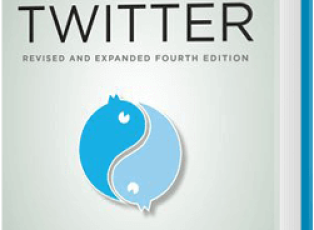
Take the Mystery Out of Twitter!

Become a Twitter Ninja in just 90 minutes with the The Tao of Twitter, the best-selling Twitter book in the world!  Learn the three elements behind every Twitter success, 22 ways to build a relevant audience, strategies to create personal and business benefits, and hundreds of amazing tips and time-savers.

Click on the image for a Special Amazon promotion!


Related Posts Plugin for WordPress, Blogger...
klout, social scoring, Twitter best practices, Twitter spam, Twitter strategy
« First...140150160«165166167168169»170180190...Last »
  • Subscribe to {Grow}

    Enter your Email
  • Welcome to {grow}

    You’re in marketing for one reason: Grow. Grow your company, reputation, customers, impact, profits. Grow yourself. This is a community that will help. It will stretch your mind, connect you to fascinating people, and provide some fun along the way. I am so glad you’re here. -Mark Schaefer
  • Follow Mark

    Follow Us on FacebookFollow Us on Google+Follow Us on TwitterFollow Us on LinkedInFollow Us on YouTubeFollow Us on RSS
  • Book Mark to Speak!

  • Groups We Believe In

  • Search

  • Categories

  • The Archives

    •  2013 (110)
      • May (19)
      • April (21)
      • March (24)
      • February (21)
      • January (25)
    •  2012 (281)
      • December (20)
      • November (22)
      • October (23)
      • September (22)
      • August (25)
      • July (24)
      • June (25)
      • May (25)
      • April (21)
      • March (25)
      • February (23)
      • January (26)
    •  2011 (274)
      • December (24)
      • November (22)
      • October (20)
      • September (25)
      • August (25)
      • July (21)
      • June (27)
      • May (27)
      • April (20)
      • March (23)
      • February (24)
      • January (16)
    •  2010 (222)
      • December (18)
      • November (17)
      • October (19)
      • September (19)
      • August (17)
      • July (17)
      • June (15)
      • May (18)
      • April (19)
      • March (21)
      • February (24)
      • January (18)
    •  2009 (190)
      • December (21)
      • November (17)
      • October (22)
      • September (21)
      • August (27)
      • July (30)
      • June (15)
      • May (26)
      • April (11)
RSS Feeds
Top | Copyright © 2013 Schaefer Marketing Solutions: We Help Businesses {grow}