@markwschaefer
{grow}
  • Home
  • You
    • Are we a fit?
    • Reputation
  • Us
    • Mark W. Schaefer
    • Client List
  • Services
    • Consulting
    • Corporate Social Media Workshops
    • Social Media Strategy
    • Social Media Management
    • Speaking
    • Teaching
    • Instant Marketing Advice
  • Media & Publications
    • Mark Schaefer’s Books
    • Social Media From Scratch
    • Free Resources
  • {grow} Blog
  • Contact
    • Contact
    • Press Inquiries


The “Instagram Act” and How to Protect Your Photos Online

May 8th

Tweet

6 comments

law book

By Kerry Gorgone {grow} Contributing Columnist

The Internet is a bit like the Wild West when it comes to protecting intellectual property and a new law makes it even a little more difficult to lay claim to your images without some proactive measures on your part.

The controversial Enterprise and Regulatory Reform Act, which just received royal assent in the U.K., permits the use of “orphan works” — copyrighted works for which the owner cannot be identified. In most cases, the owner is dead, although it’s also possible that he or she simply has no interest in laying claim to the work.

Permitted uses under the new law would include digitizing archival library collections of unpublished works for purposes of preservation, but the law also allows commercial, for-profit uses of these works, such as advertising.

Photography groups vehemently opposed the legislation on the grounds that they stand to lose ownership and control over any images they post online.  Critics have compared the law to the sweeping changes that Instagram made (and later unmade) to the app’s terms of use in December 2012.

Artists and photographers everywhere need to take proactive measures to protect their creative works, placing watermarks on images prior to uploading them online, and populating metadata with ownership information.

The U.K. media is also recommending that photographers and artists register each individual work with the U.S. Copyright Office or the PLUS Registry in the U.K. to ensure that they are identifiable. This way, even if someone could strip identifying information out of an image and repost it online, an interested owner can always come forward to claim their work. Many have cited the cost and time required to register each individual work as prohibitive, but at the moment, there aren’t many options.

Individual authors / artists registering through the U.S. Copyright Office could try registering works as a compilation, provided they published them all within the same year. (37 CFR 202.3(b)(10)) The filing fee for registering groups of photos is currently $65. At minimum, this reduces the likelihood that a work will be considered “orphaned” in the first instance.

Obstacles abound for copyright holders, including the fact that the U.S. Copyright Office does not offer a reverse image search. In the U.K., the PLUS Registry only holds names, and the “upload and search on an image” function does not yet work. Still, anything is better than nothing, given that the law has passed.

PLUS-Registry

Another important thing to note is that the U.S. Copyright Office saves images for only ten years, unless the copyright holder pays an additional $470 for “full-term retention of a published deposit,” so the value of registration after that point is questionable.

One thing photographers can do is monitor Google for uses of their copyrighted works. Google’s sophisticated search technology does permit reverse image searches, so users can upload their copyrighted image and see matching images identified by Google. This will help copyright owners to detect infringing uses, so they can assert their rights against the infringing party.

Reverse-Image-Search
As theoretically devastating as this development is for photographers, I really think that most works affected will be works no owner will ever claim; images that previously could not be used because of a potential copyright claim that would never materialize.

Companies don’t want legal headaches anymore than you do. They’re unlikely to intentionally use works that someone might sue over. Given the huge body of available images, there’s no reason to think they’d elect to steal a copyrighted work when they could find (or create) any number of suitable images for advertising purposes.

Bottom line: protect yourself to the extent you can. Wouldn’t you do that anyway?

Kerry O'Shea Gorgone

Kerry O’Shea Gorgone, JD/MBA, is an attorney who teaches New Media Marketing in the Internet Marketing Master of Science Program at Full Sail University in Winter Park Florida. Follow her on Twitter: KerryGorgone

Photo courtesy Flickr Creative Commons umjeandoan

instagram, intellectual property, social media law, social media legal issues

Could too much tweeting cost you your job?

May 7th

Tweet

47 comments

This is not a blog post about any titanic trend or an insight into a new marketing strategy. This is about one little thing — tweeting when you’re not supposed to — and what it might mean to your career.

geno smithOne of my favorite college football players is Geno Smith of West Virginia University.  I have rarely seen a young athlete approach the game with more intelligence, intensity, and leadership.

Many people expected him to win college football’s highest honor, the Heisman trophy and perhaps be the first athlete picked up in the professional football draft last week.

It turns out, he wasn’t a contender for the Heisman honor and was not even the first player at his position to be chosen in the draft.  Over the last six months, his stock has continued to slip among the professional football executives despite his breath-taking skills. Why?

Perhaps it is because he tweets too much.

The thrill of victory. The agony of de tweet.

Jason Cole of Yahoo! Sports reported that when Smith went on visits to prospective teams, rather than interact with coaches and front-office people who would be making the decision to hire (draft) him, he would spend much of his time by himself on his cell phone, texting friends and interacting with his Twitter stream.

One official said: “All these other players who were in there were talking to the coaches, trying to get to know people and he was over there by himself,” one of the sources said. “That’s not what you want out of your quarterback.”

Eventually Geno was drafted in the second round by the New York Jets, but his disconnected attitude may have cost him millions of dollars in salary, endorsements, and publicity as a first-round draft pick.

I have a friend who might actually lose his job over Twitter. He’s addicted to his Twitter stream and tweets constantly. His employer is upset about this habit and told him that he needs to concentrate at work.  ”They just don’t understand me,” my friend lamented. “This is how I stay connected to my friends.”

A few weeks ago, I noticed that a well-known social media celebrity was tweeting and texting from a conference panel in front of a room filled with several hundred people. Instead of paying attention to the moderator and interacting with the other panelists, he disconnected from the conversation the entire time with his head down in his Twitter stream.

Be here now.

I imagine that some readers from Generation Text might be thinking “Who cares?”

Obviously the NFL team owners care.  Even though Geno Smith is a remarkable talent, they wanted him to pay attention. I think that even in our text-frenzied world, it should be a priority to be present in the moment, to provide individual attention that communicates “I care about what is going on here, right now, instead of the action on my phone.”

I might not be an NFL team owner drafting a quarterback, but I have made a mental note to never hire or recommend that distracted social media celebrity panelist for a speaking engagement. There are a lot of choices out there. Being attentive and professional is important, even if you have loads of talent — as Geno found out.

Everything communicates. Everything becomes part of your personal brand … including how and when you use Twitter. Do you agree? Or, do you see expectations in the business world changing to conform to Generation Text?

geno smith, social media addiction, social media etiquette, Twitter best practices, twitter case studies, twitter for business

In praise of the naked business

May 5th

Tweet

80 comments

the thinker

I have a confession to make.

I run my business from a chair.  I’m not kidding.

Writing books. Preparing speeches. Blogging. Consulting with companies from all over the world. It all happens right here.

My chairIt wasn’t always this way.  I have loved having a private, beautiful, quiet office but when I moved a few years ago, I put off setting up the desk for a few weeks as our lives settled into a new home. Weeks turned into months. Months turned into years. I found that I didn’t need all that stuff. I discovered that my desk was simply a place to hold photos, books, and files and I can do all of that on an iPhone.

Consequently, my beautiful desk has remained under cloth sheets in the garage for four years. I have come to embrace the simple, mobile business life. The world headquarters for Schaefer Marketing Solutions is wherever I am sitting.

By contrast, I recently visited the glorious offices of a Fortune 500 Titan. Up on the 50th floor of a skyscraper, many of the private offices had a leather couch, beautiful art, and tasteful decor. Quite a shock to my senses. It occurred to me that they really don’t need any of that stuff. Just get a good chair and wi-fi would do it, right? They could profit from living in my world for a little while!
I’ve come to take pride in this simple business approach. I can beg and borrow a meeting room when I need it. I commandeered the family dining room when I had to spread out documents, outlines, and research while writing a book. I thrive with almost no overhead. I run a naked business.

Naked on the run

We have our house up for sale (time to down-size) and the unpredictable flow of potential buyers has disrupted my nakedness. The other day I had a solid morning of interviews to help promote my new book, Born to Blog. The hub-bub of the local coffee shop certainly would not do. I needed a very quiet space. So I moved my company headquarters to my father-in-law’s house.

“Do you have wi-fi?” I asked my elderly father-in-law.

“I believe so,” he said.

At that point, I should have known this was going to be trouble … but I went ahead and set up shop any way.

He did indeed have wi-fi and I began my first radio interview, which was to last 30 minutes. As soon as I got on the call his grandfather clock started gonging. And it was noon! 12 gongs! LOUD gongs!


I grabbed my laptop, and ran out the nearby door to his back deck to escape the clanging clock.

As I was concentrating on the interview questions, a neighbor with a snow-white handlebar mustache came wandering across the yard. “Is Orville home?” he yelled.  I frantically pointed to my headphones. He looked puzzled. I guess he thought I was hooked up to my computer as some sort of hearing aid because then he started to yell loudly at me, “Is Orville home?”

I ducked back into the house. The phone started ringing. Yes, he still has a home phone. And an answering machine. But not just any answering machine. This is an answering machine that yells “The phone is ringing!  The phone is ringing!” I cannot completely explain this. I think they must have bought this off a late night infomercial or something. “My phone is ringing and I can’t get up!” Or something like that.

I ducked back outside, still towing my laptop.  Another neighbor had just fired up his riding lawn mower. I ducked back inside the house desperate to find a corner of peace and quiet.

The phone was ringing again. A voice came on the answering machine. “Orville, I just wanted to let you know there is a strange man talking to himself on your back porch. Are you safe over there?”

I ran out the front door, as a huge garbage truck came barreling down the street. I ran back inside.

Seeing me run all over the house, my father-in-law concluded that my interview must be over. “Can I make you a salad?” he asked in his booming voice. I muted the call and explained to him that I was still working. As my mother-in-law started her vacuum cleaner.

I ran into the bathroom and closed the door.  Finally, I had a quiet space. Small. But quiet. The lights flickered. And when out. The power, and the wi-fi, was gone.

Naked revisited

OK. Maybe I do need that office.

I was traumatized by this experience, or maybe I am simply looking for an excuse to treat myself to a real office again. Perhaps I was a bit hasty about this naked business thing.

As we prepare to move again — hopefully for the last time in a LONG time — I’m re-considering the idea of a big ol’ manly office. A moffice. Or, I guess “mofo” for short? My mofo — a place to escape into business bliss!

I’ve proved that I can successfully create, consult, and coach on a global scale without the trappings of leather and fine art. However, as I enter the next phase of my career, it might just be enshrined in mahogany after all.  Moffice 2.0?

How do you work? Naked or covered up? Go.

entrepreneurship, innovation, lean business, schaefer marketing solutions

Inappropriate Attire. A {growtoon}.

May 3rd

Tweet

No comments

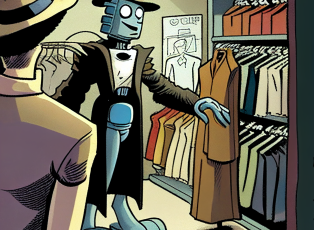
inappropriate attireThis cartoon was inspired by actual events … which can be seen here: Instagram beauty contests worry parents, privacy advocates

Join the growtoonists each Friday for a humorous take on marketing, social media, and current business events.

Kacy Maxwell is a guy who loves his work, family and a good challenge. See more of his cartoons at everything is media.

Related Posts Plugin for WordPress, Blogger...
kacy maxwell, social media cartoon, social media humor
«12345»102030...Last »
  • Subscribe to {Grow}

    Enter your Email
  • Welcome to {grow}

    You’re in marketing for one reason: Grow. Grow your company, reputation, customers, impact, profits. Grow yourself. This is a community that will help. It will stretch your mind, connect you to fascinating people, and provide some fun along the way. I am so glad you’re here. -Mark Schaefer
  • Follow Mark

    Follow Us on FacebookFollow Us on Google+Follow Us on TwitterFollow Us on LinkedInFollow Us on YouTubeFollow Us on RSS
  • Book Mark to Speak!

  • Groups We Believe In

  • Search

  • Categories

  • The Archives

    •  2013 (105)
      • May (14)
      • April (21)
      • March (24)
      • February (21)
      • January (25)
    •  2012 (281)
      • December (20)
      • November (22)
      • October (23)
      • September (22)
      • August (25)
      • July (24)
      • June (25)
      • May (25)
      • April (21)
      • March (25)
      • February (23)
      • January (26)
    •  2011 (274)
      • December (24)
      • November (22)
      • October (20)
      • September (25)
      • August (25)
      • July (21)
      • June (27)
      • May (27)
      • April (20)
      • March (23)
      • February (24)
      • January (16)
    •  2010 (222)
      • December (18)
      • November (17)
      • October (19)
      • September (19)
      • August (17)
      • July (17)
      • June (15)
      • May (18)
      • April (19)
      • March (21)
      • February (24)
      • January (18)
    •  2009 (190)
      • December (21)
      • November (17)
      • October (22)
      • September (21)
      • August (27)
      • July (30)
      • June (15)
      • May (26)
      • April (11)
RSS Feeds
Top | Copyright © 2013 Schaefer Marketing Solutions: We Help Businesses {grow}