Posts tagged brian solis
Brian Solis goes bold with the “Future of Business”
Mar 21st
Click here if you cannot see this interview with Brian Solis.
Brian Solis is among the world’s most prolific business authors but when you see his new book, What’s the Future of Business: Changing the Way Businesses Create Experiences, you’ll immediately notice a difference. The book is sleek and an unusual dimension. It’s filled with full-color pages and cartoons. This is not your father’s business book.
Solis was determined to create a book that was an experience and he has achieved it. In this video interview he describes his vision, the design process, how he writes a book, and provides a hint of what to expect next from his prodigious creative output. Hope you enjoy the interview!
My take on the book: Since doing the interview I had a chance to read the book and I think it is Brian’s best effort to date. He is an excellent writer and the time just flew by.
Think about this gift — In his consulting practice, Brian gets to observe the inner workings of many of the top brands in the world and now we get to see his cumulative learnings in one place. The book is filled with many thought-provoking gems like “We live in a time when brands are people and people are brands.”
I would say that this is a very B2C-centric book. His models may have some applicability to B2B but generally the book is tailored to a world of personal loyalty instead of a world of long-term contracts and annual price negotiations, but there are lessons in here for everybody.
The main take-away for me was his idea to create conversational customer experiences in a proactive, measurable way as part of an overall marketing plan.
Disclosure: The book link is an affiliate link. The book was a provided to me free from the author. Brian wrote a testimony for my book Return On Influence, which was published in the book.
The Trojan Horse social media marketing strategy
Feb 8th
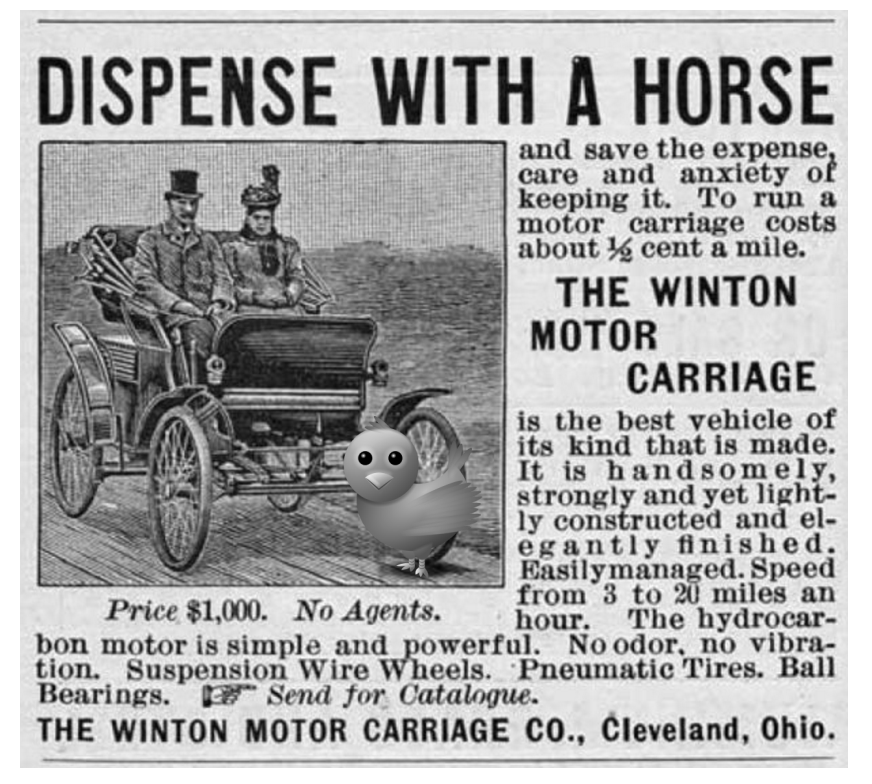
The Greek tale of the Trojan Horse is among the most well-known stories in history.
After an unsuccessful 10-year siege, the Greeks constructed a huge wooden horse, and hid a group of brave soldiers inside. The Greeks pretended to sail away, and the Trojans pulled the horse into their city as a victory trophy. That night the Greek force crept out of the horse and opened the gates for the rest of the Greek army, which had sailed back under cover of night.
The Trojans received a thoughtful departing gift but there was surprise inside wasn’t there?
While I can’t promise the dominance of a nation (or even Facebook), there is a similar opportunity for marketers today — give people a gift with a little surprise inside. There are three examples that come to mind — perhaps you can name more …
Badges — My oh my bloggers love badges. I have a few of them on {grow} that I wear with pride, especially if it represents praise from judges or my readers like the Content Marketing Institute Award for being one of the Top 10 Content Marketing blogs in the world. So my prize was a badge … but there’s a surprise inside! That badge links to the CMI website and creates a powerful Search Engine Optimization benefit. It’s almost like I added them to a blog roll. They have a semi-permanent advertisement on my blog. Pretty clever, huh?
Guest posts – I like to shine a light on deserving writers and thinkers in the {grow} community by inviting occasional guest posts. This is obviously great exposure, but if the writer is clever (and they are), they can also create links within a guest post to other posts and web destinations that will benefit their business. A gift to me? Sure? But those links are like soldiers leaping out of the horse to drive traffic to their website!
Comments – Even the humble blog comment can have have a traffic-driving strategy behind it. If you’ve written a post that complements something I’ve written, why not put a link to it in a comment? I consider every comment a gift, but it can also open up opportunities for you. Comments are scanned by search engines, and associating a link with a popular blog article can’t hurt. Even uber-blogger Brian Solis recently got into the act when he had his own linkbait beach party on my blog. He left the most link-filled comment in the history of mankind — 11 links in a single comment (right). Was he being authentically helpful? Probably. But folks … he sure did drag one big Trojan Horse on to the blog!
Here’s the key to success in executing a Trojan Horse strategy — if it appears like you’re gaming the system or being inauthentic in any way, you will be sniffed out and booted, most likely. Like all aspects of the social web, people still want real value in content and connections.
If you leave a legitimate comment with a meaningful link to explain your position, I respect that. It adds value for everyone involved. By the way, I’ve had about 8,000 comments on {grow}. I’ve deleted TWO as being inappropriate.
So I’ve provided three examples of this strategy. Can you think of other ideas of how this might work? Does this strategy make sense to you?
I’ll be discussing this idea and dozens more in a free Feb. 16 MLT Creative webinar, Elevating your Blog: Content, Conversions and Content.
Five Hidden Secrets of Social Media Failure
Jan 9th
2011 will be a year when many marketing professionals hit the social media re-set button. After climbing aboard the “engagement train” for fear of being left behind, many marketers will come up empty when they try to explain what they actually achieved for the money. The honeymoon is over. Show me the money.
This theme of social media failure was recently addressed by PR Smart Guy Brian Solis. I usually agree with Brian but his recent post seems overly-simplistic. Let’s explore this vital issue and fill in some of the points that Brian overlooked. Why are the majority of social media efforts failing?
1) THE MYTH OF PLANNING
Brian seems to equate a lack of planning with a failure to have goals. I think these are distinct problems.
Rather than lack of planning, one common source of social media failure is OVER-PLANNING. I mean if there is one thing corporations really know, it’s planning! Every major goal has a 2-5 year forecast attached to it, doesn’t it? But that’s the fatal flaw.
- Many companies don’t have a corporate culture ready to adjust marketing tactics month-to-month. What was the last major platform shift in television advertising? Cable? The idea that the medium is shifting right under your feet is unfamiliar. Not only are the channels evolving rapidly, the rules of engagement are changing too! You can’t plan for that. Would your company devote half its social media budget to a category called “we don’t know yet?”
- The other cultural aspect contributing to failure is that the real opportunities on the social scene may not present themselves in what we’ve planned to do (i.e. “We’ll take out an ad and hope people come to my sale”). With new media, commercial opportunities appear in the moment (I just found a person who needs our product - let’s make a deal and get the business.”). Are you organized for In The Moment Marketing? Authority for service, sales, sometimes even pricing, may need to be pushed down to the level of the organization dealing with the buzz every day.
2) NOT JUST GOALS — METRICS
Brian wisely states that “accountability, metrics, and outcomes serve as the foundation for social media success.” But that’s just the tip of the iceberg. Goals drive EVERYTHING so the TYPE of metric you choose is more important than the tactics you put into place to achieve them.
The problem rests in the fact that many companies will only believe results that can be displayed on an Excel spreadsheet. But if you’re only relying on quantitative results, you’re missing the real beauty of the social web. Many of the business benefits of social media can only be captured through qualitative measures. If you’re interested in learning more, I recommend:
- Explaining the ROI of Twitter
- Social media measurement: Sometimes a picture is worth a thousand tweets
- Three reasons why the experts are wrong about social media measurement
3) WHY THE BOSS MATTERS
“Social media strategy must gain attention from the very top of the organization and see its integration across relevant business teams,” says Brian.
Social media initiatives must get more than mere attention from the top. They must be sponsored from the top. There is no such thing as a grassroots strategic initiative.
Many failures occur from trying to do too much too quickly. Rather than integrate “across business teams” Success is far more likely by planning achievable goals, publicizing quick wins, and then shaming laggards into adoption. Rolling something out across the company will smell like a “program of the month.”
4) BEYOND MARKETING
Brian points to an eMarketer report that shows adoption is taking place primarily in the marketing departments. He says that to be successful, companies need look at every department that engages publicly — HR, legal, environmental, etc. — and apply these tools. I agree but will also take it a step further.
In addition to looking at these obvious external applications, the more potent business benefit might be using social networking platforms INTERNALLY. The technology is mature and people love to use these tools. Think of the opportunities for collaboration, knowledge management and innovation if we could connect employees in a far-flung global enterprise! I think this is the next big thing in social media. Applying internally may be less risky than leading with a public social media showcase.
5) THE CURSE OF THE SOCIAL MEDIA KNOW-NOTHINGS
One reason for failure overlooked by Brian is the drastic mis-match between social media resource availability and need. This is such a new area and the parameters are constantly shifting. The market is flush with social media know-nothingswho have little knowledge of business or marketing, let alone a track record of measurable success. If you’ve assigned social media marketing to the intern or the person with the most Facebook friends, this might be a root cause of failure too!
That’s my take on the subject. What are your thoughts? The comment section is now open for YOU!


You’re in marketing for one reason: Grow.
Grow your company, reputation, customers, impact, profits. Grow yourself. This is a community that will help. It will stretch your mind, connect you to fascinating people, and provide some fun along the way. I am so glad you’re here.
-Mark Schaefer