Posts tagged competitive advantage
The best advice I ever received for my business, and my blog
Jan 22nd
I was recently asked by an interviewer, “Who has had the greatest influence on your personal growth?” Pretty good question! But the answer was easy. In fact, there was one lesson I learned from one man that has had a profound impact on my approach to life, my business, and my blog. I’ll share that important lesson with you today.
Sensei and sensibility
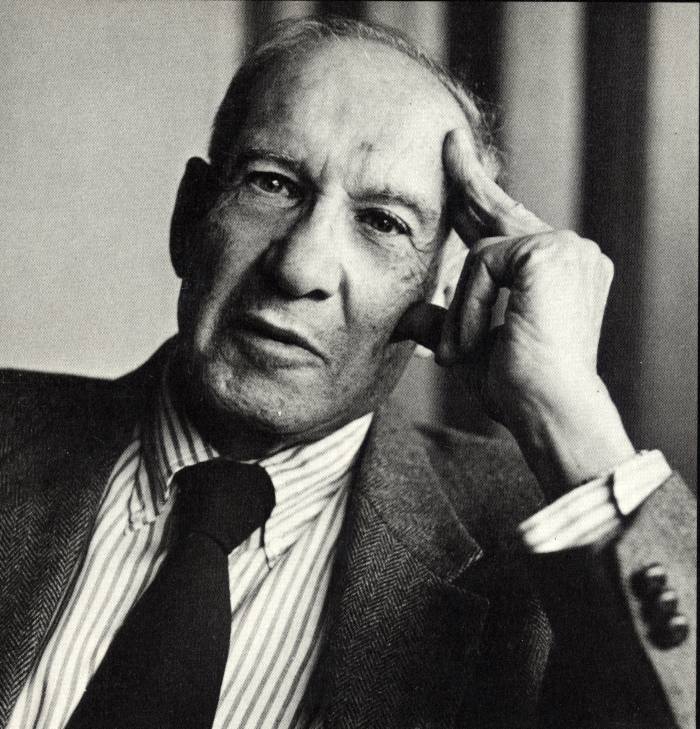
When I lived in Los Angeles, I desperately wanted to attend the MBA program at Claremont Graduate University for one reason – Peter Drucker taught there (in fact, the school was named for him). If you have never heard of Peter Drucker, discovering his books and articles might be the most important thing you can do for your career.
I applied for entry to the college, but was told I was too young to be accepted to this prestigious program. I would not quit that easily, however, and went through an appeal process, arguing that they needed my youth (27 at the time) to add to the diversity of the program! I made an unlikely stand on the grounds of EEO, which was quite a stretch, but incredibly, I was admitted! Perhaps my tenacity amused them.
Peter Drucker was one of the handful of people I have known who could distill vast complexity into simple wisdom. The scope of his knowledge was breathtaking. He would sit on the edge of his desk and lecture for three hours straight without a break, and without notes. He generally lectured about one of his books. My favorite was Innovation and Entrepreneurship a remarkable book that still holds up today.
A new approach to leadership
Professor Drucker taught via the Harvard case study method. We would be assigned to read a long, detailed, real-life business case and then dissect it in class to discover the true nature of how business worked.
The students in this class were high-flyers — the brightest business executives in the Los Angeles region — and they were always trying to “solve” the business case. Nothing made Professor Drucker angrier than that! “What makes you think you are smarter than the people in the case?” he would ask, “Smarter than people who have worked in this industry for decades? How can you be that arrogant?
“Your job as a business leader is not to provide the right answers. It is to provide the right questions.”
Over and over he would pound this truth into our heads until it became part of our DNA. And he was so right … so profoundly right. There is not a week that goes by that I don;t think of some lesson from Professor Drucker, but this was the most important of all.
Think of the power of leading people to the most effective solution, not by pontificating and telling them what to do, but by distilling the issue down to the essential question and letting them discover the answer themselves.
Adopting a strategy of professional humility is anathema to our modern Western culture. We may associate humility with weakness, when in fact it is strength.
The essence of blogging?
Like most young people starting out in business, I felt a need to know all the answers, especially when I was promoted to a leadership position. But from Professor Drucker I learned that being vulnerable, involving others in the process, coming up with a better solution together, sharing the weight of decisions – those are all benefits of humility. Being deeply human, instead of trying to wear the Superman cape, is powerful and liberating.
This is also a key to effective blogging I think. Most bloggers adopt a mantle of invincibility and that is certainly the easy path to take: “I publish, therefor I’m correct.”
But being a humble blogger leads to meaningful social media engagement and ultimately, crowd-sourced wisdom. I almost never have the answers. But I think my blog posts do present the essential questions: Does every business need a social media strategy? What is the value of social media engagement? How do we measure success?
And then YOU provide the answers through your comments. A much better system, don’t you think? How could I possibly sustain this blog for the last four years by only giving you answers? Nobody is that smart.
I hope this resonates with you in some small way. How does this idea land on you? Could being a humble leader become a key to making you a better leader, a better parent, a better blogger?
Photograph courtesy Claremont Graduate University
Link to Innovation and Entrepreneurship is an affiliate link.
Social media and the end of empathy
Jul 7th
Why am I using a picture of a large mouth bass on a blog post about social media and business? Seems a little fishy doesn’t it? Well I didn’t use this for the halibut. There is a very relevant story with a lot of marketing mussel. A story on a grand scale, you might say.
When I was a young sales guy I learned a very important lesson about customer relationships and empathy from a fishing trip.
My company was struggling through a massive quality issue that was threatening my customer to the point that it was shutting down their production lines … and THEIR customers’ production lines. In business terms, this was an apocalyptic problem and it eventually resulted in the largest quality claim in the history of my company.
Nerves were beyond frayed. I remember spending one Labor Day weekend sorting through reams of lot numbers in search of alternatives that might work. We couldn’t find any and I was forced to make an excruciating call. I had to tell a plant manager that every lot of our material in his plant, every lot in transit, and every lot in our inventory was defective. We were going to shut his plant down, maybe for weeks.
Months before, this customer and I had become good friends on a company-sponsored fishing event. Yes, businesses used to do that kind of thing. Believe me, when you spend eight hours in a bass boat with one guy, you get to know him pretty well! We had shared a lot of our life stories and created a great memory on this trip.
As I made the phone call and delivered the news, I held my breath. There was shocked silence at the other end of the phone. Finally, my customer said, “Schaefer, the next time we’re in a fishing boat together I’m going to toss you out!”
He was able to use our shared experience and friendship to break the tension and tell me in an empathetic and humorous way that he knew it wasn’t my fault and that we would get through this crisis together.
The days of conducting business based on these deep relationships is largely over I think — relationships that were built on a golf course, a boat, long dinner conversations — not text messages, online help functions, and customer service tweets.
Ten years ago, if you had a business crisis, you could probably count on those deep relationships to help pull you through, at least to a certain extent. Today, and especially after the recession, people just don’t have time for relationship-building. I can’t imagine inviting a customer to a weekend of golfing any more. Everybody is doing what used to be three jobs. Who has the time for building business friendships?
I wonder about the long-term implications for business when relationships are negotiated through spreadsheets and emails. I have an image in my mind of that United Airlines commercial where a businessman laments losing a customer because they never saw them. He proceeded to hand out airline tickets for customer locations.
Maybe there will be backlash and a re-focusing on deep relationships at some point. There was recently a story about tech start-ups scrambling for office space near Twitter because of the live networking opportunities. Kind of ironic. Seeking deeper offline relationships with people dedicated to spreading low-impact online relationships.
The social web: New battlefield, same war
Feb 5th
Jay Baer is one of the few bloggers I’ve found who consistently provides business-based, practical marketing advice. I usually agree with him. But he made a reference to social media marketing on a post this week that struck me as odd:
“… unlike every other marketing tool for the past 200 years, it’s a meritocracy, and that benefits us all.”
I’m only picking on Jay because this is the most recent iteration of a theme I’ve observed countless times — the opinion that somehow the social web is in a special new category where you actually have to EARN the trust of your customers. Another variation is that the social web has “changed everything” about business and marketing.
No, it hasn’t.
The free market economy has ALWAYS been a meritocracy and always will be. If you don’t provide a quality product or service and you don’t represent it in an honest and compelling way, you won’t earn your way into the hearts and wallets of the world’s consumers.
Pre-social media, pre-Internet, even pre-mass communications, the fundamental tenet of marketing was this: Establish a brand promise based on consumer trust and never, ever break that trust. The concept is simple, the execution is extremely difficult.
Marketing is a continuous war to promote and protect your brand, whether it is a company, hospital, university, sports team or individual. Social media offers an exciting new way to connect, but the marketing fundamentals are truly still the same.
The social web is just a new battlefield, not a new war.
How is the social web affecting your battle plan?
The new competitive advantage: There’s an app for that
Jan 27th
There seems to be this new genre of media out there meant to scare the crap out of you. The techno music starts to pulse and then these animated slides whiz these amazing facts at you like “Did you you know that the average worker now spends 26 hours a day on Facebook?” <next slide> “And that rate is growing at a rate of 1,120%” <next slide> PER MONTH??”
These ”scare slides” are meant to impress you with social media’s omnipotence and power. Through the pounding music they want you to think that change is coming at you so fast that you might as well just call it a day … unless you buy their consulting services.
I don’t know where they come up with these facts, but here’s one that caught my attention: “For a college freshman, half of what they have learned will be obsolete by their junior year.”
While that “fact” seems improbable, it did make think about the accelerating rate of change and the impact on indivudals as we try to remain effective leaders.
A hypothesis: Personal “technological adaptability” is going to be an increasingly important life skill.
Here’s what I mean. The rate of technological change is occurring so fast that an ability to quickly assess, process and deploy new apps will be a source of competitive advantage not only for companies, but for individuals.
Let’s say we had two employees, equally educated and experienced. Both are given a task. Employee One begins the task, as assigned by the boss. Employee Two first assesses free tools on the web that can sort, organize and automate that task. Ultimately that employee will provide a better, faster and cheaper result for the company. And get a promotion!
Even two years ago this would not have been an issue. Both employees would basically have access to the same company-issued and approved technology — Excel, Access, Word, etc. But now, for almost any work task, somewhere, there’s “an app for that.” The ability to find and apply these free and useful ideas will become an increasingly critical skill.
So what does this mean for me and you? How do we keep our edge at this incredible rate of change? Where do we find the time to do explore and learn new applications? How do companies enable this skill in employees?


You’re in marketing for one reason: Grow.
Grow your company, reputation, customers, impact, profits. Grow yourself. This is a community that will help. It will stretch your mind, connect you to fascinating people, and provide some fun along the way. I am so glad you’re here.
-Mark Schaefer