

Posts tagged customer satisfaction
The best advice I ever received for my business, and my blog
Jan 22nd
I was recently asked by an interviewer, “Who has had the greatest influence on your personal growth?” Pretty good question! But the answer was easy. In fact, there was one lesson I learned from one man that has had a profound impact on my approach to life, my business, and my blog. I’ll share that important lesson with you today.
Sensei and sensibility
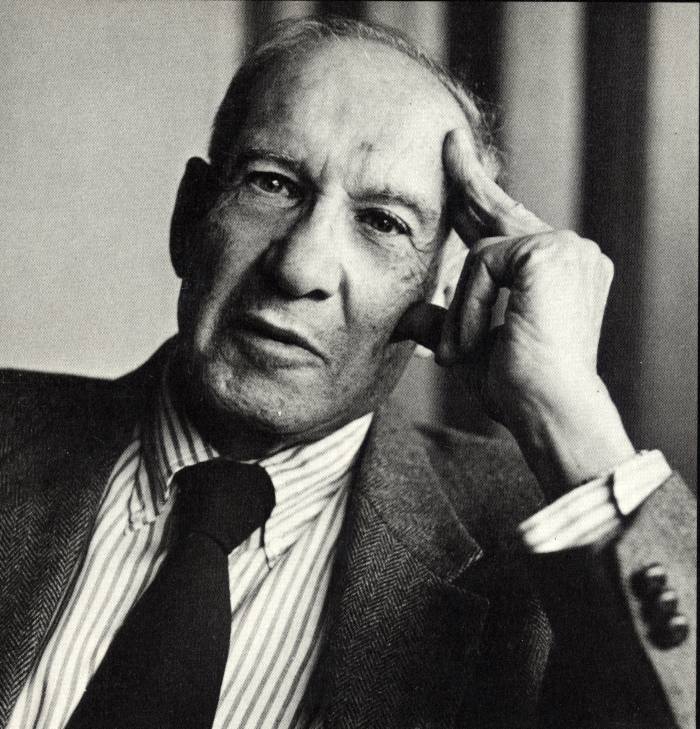
When I lived in Los Angeles, I desperately wanted to attend the MBA program at Claremont Graduate University for one reason – Peter Drucker taught there (in fact, the school was named for him). If you have never heard of Peter Drucker, discovering his books and articles might be the most important thing you can do for your career.
I applied for entry to the college, but was told I was too young to be accepted to this prestigious program. I would not quit that easily, however, and went through an appeal process, arguing that they needed my youth (27 at the time) to add to the diversity of the program! I made an unlikely stand on the grounds of EEO, which was quite a stretch, but incredibly, I was admitted! Perhaps my tenacity amused them.
Peter Drucker was one of the handful of people I have known who could distill vast complexity into simple wisdom. The scope of his knowledge was breathtaking. He would sit on the edge of his desk and lecture for three hours straight without a break, and without notes. He generally lectured about one of his books. My favorite was Innovation and Entrepreneurship a remarkable book that still holds up today.
A new approach to leadership
Professor Drucker taught via the Harvard case study method. We would be assigned to read a long, detailed, real-life business case and then dissect it in class to discover the true nature of how business worked.
The students in this class were high-flyers — the brightest business executives in the Los Angeles region — and they were always trying to “solve” the business case. Nothing made Professor Drucker angrier than that! “What makes you think you are smarter than the people in the case?” he would ask, “Smarter than people who have worked in this industry for decades? How can you be that arrogant?
“Your job as a business leader is not to provide the right answers. It is to provide the right questions.”
Over and over he would pound this truth into our heads until it became part of our DNA. And he was so right … so profoundly right. There is not a week that goes by that I don;t think of some lesson from Professor Drucker, but this was the most important of all.
Think of the power of leading people to the most effective solution, not by pontificating and telling them what to do, but by distilling the issue down to the essential question and letting them discover the answer themselves.
Adopting a strategy of professional humility is anathema to our modern Western culture. We may associate humility with weakness, when in fact it is strength.
The essence of blogging?
Like most young people starting out in business, I felt a need to know all the answers, especially when I was promoted to a leadership position. But from Professor Drucker I learned that being vulnerable, involving others in the process, coming up with a better solution together, sharing the weight of decisions – those are all benefits of humility. Being deeply human, instead of trying to wear the Superman cape, is powerful and liberating.
This is also a key to effective blogging I think. Most bloggers adopt a mantle of invincibility and that is certainly the easy path to take: “I publish, therefor I’m correct.”
But being a humble blogger leads to meaningful social media engagement and ultimately, crowd-sourced wisdom. I almost never have the answers. But I think my blog posts do present the essential questions: Does every business need a social media strategy? What is the value of social media engagement? How do we measure success?
And then YOU provide the answers through your comments. A much better system, don’t you think? How could I possibly sustain this blog for the last four years by only giving you answers? Nobody is that smart.
I hope this resonates with you in some small way. How does this idea land on you? Could being a humble leader become a key to making you a better leader, a better parent, a better blogger?
Photograph courtesy Claremont Graduate University
Link to Innovation and Entrepreneurship is an affiliate link.
It worked for Zappos. It probably won’t work for you.
Jan 24th
Zappos* is a successful company with a well-publicized, aggressive employee use of social media. In fact, it may be the most famous social media model in all of blogdom. They have 13 blogs, 50,000 videos and their employees tweet like rabbits in heat. It’s worked for them and it’s a wonderful case study. I get it. But it’s probably the wrong model for most companies.
And here’s the point where the waves of Zappo-sniffing social media purists come crashing down on me. So be it. This is dangerous stuff.
It is relatively safe to blog and tweet about shoes. But in many companies, the risk of an all-employee social media free love policy will far outweigh the benefits. For many important companies all it will take is one Twitter-induced SEC violation, a leak of vital competitive information, or a national defense breach, and the hammer will come down on the use of social media forever. Policies are usually made to deal with the lowest common denominator.
Is this a leadership issue? Not necessarily. There are irresponsible people everywhere. There are disgruntled employees even in the best-managed companies. Where corruption can occur it will occur. Welcome to the human race.
So what’s the answer?
Under the following conditions, the Zappos model might be ideal:
- Company culture supports employee engagement
- Company leadership understands the model
- Customer base is active on the social web in a meaningful way
- Benefits outweigh risk of security breach
If just one of these conditions are not met, the free love policy cannot work.
That’s not to say that social media won’t work in some form with almost any company if there is appropriate training, role clarity, effective policy and boundaries. But you have to fit the tactics to the strategy — and the culture — just like any initiative.
A marketing leader has to make effective decisions based on what IS, not on what you WISH for. You can’t “will” a social media effort to work in your company just because it worked in the Zappos corporate culture.
For an excellent and thorough perspective on the need for effective and appropriate corporate social media policies, I recommend Kent Huffman’s recent post on the subject.
OK, your turn. Let ‘er rip!
*If you are unfamiliar with the Zappos social media model, Jeff Bullas has written wonderful case studies on this company:
How social media can hurt business relationships
Dec 20th
The social web may be the most revolutionary marketing tool since the advent of radio. I don’t have to tell you why at this point. But for all the opportunities, there can also be danger, if the technology is mis-applied or misunderstood. Here are some ways social media can destroy customer relationships:
1) Hit and run communication. Many people, especially under-20s who have been conditioned to handle conflict over text messages, mis-use the technology. If 80 percent of communication is non-verbal, how much is lost when customers provide customer service issues over a tweet? We are more likely to be unprofessional, harsh and inappropriate in writing than in a live conversation and unfortunately, more and more important customer interactions are taking place over short-form messages.
2) False sense of expectations. I’ve observed that some companies are urgently getting into the social media scene and then being unprepared for the response. It’s so easy to connect with customers today, but you better be prepared to connect with them in a meaningful and appropriate way or you will disappoint them and then lose them.
3) Over-dependence on social media. Pick up a phone. Make a personal visit. Write a thank-you note. Don’t get too hooked on communicating through only social media, especially if it’s not your customer’s preferred way to communicate. Going old school can actually help you stand out.
4) Wrong person in charge. Some companies pick a person to run their social media efforts just because they have a nice Facebook page. Wrong. Like your website or your sales and customer service efforts, this is your front line of defense. I would much rather have an experienced customer service person learn social media than a social media person learn customer service.
5) Customers are learning to game us. I had a company president tell me that he no longer responds to customer complaints over Twitter. Customers caught on that complaints meant free merchandise and the company became overwhelmed. So they just stopped until they can figure out a solution. Now even people with real complaints are being ignored because it is too difficult to separate the real problems from the gamers.
So, there are a few dangers withn the opportunities. What do you think? What customer-related dangers could be prompted by using social media in your business?
Are you using your buffalo?
Nov 6th
Inventory — A customer in France made coated metal plates and, for quality control purposes, had to keep a large volume on hand in a warehouse. This tied up valuable working capital. We had the idea to use this as a rapid-turnaround stockpile. They could sell and ship material out of the warehouse for customer emergencies as a premium service — at a premium price!
People — A local company said they needed my help because “everyone was just sitting around” with their business levels so low. I saw this as under-utilized human capital. How could they put these people to use to connect to customers and discover un-met or under-served needs? Turn EVERYONE into a sales person? Study the competition?
Information — A client had developed a weekly email update to keep their salespeople on top of changing market conditions. A survey indicated their customers were hungry for the same type of information. Their email was turned into a premium information service to increase customer satisfaction and loyalty. They leveraged information they already HAD to create a siginificant new customer benefit.
Services — I recently taught a class on recession marketing. The class content is now an asset, part of my “buffalo.” I turned some of the ideas into articles for my website and now, my blog. I promoted this content through online forums and social media. One article had more than 500 downloads in two days. These new contacts were added to my mailing list for further follow-up. The session was videotaped and edited into short topics for my website and YouTube.
How are you using the whole buffalo in your business?


You’re in marketing for one reason: Grow.
Grow your company, reputation, customers, impact, profits. Grow yourself. This is a community that will help. It will stretch your mind, connect you to fascinating people, and provide some fun along the way. I am so glad you’re here.
-Mark Schaefer

