

Posts tagged first mover advantage
What comes after content marketing? Here are four ideas.
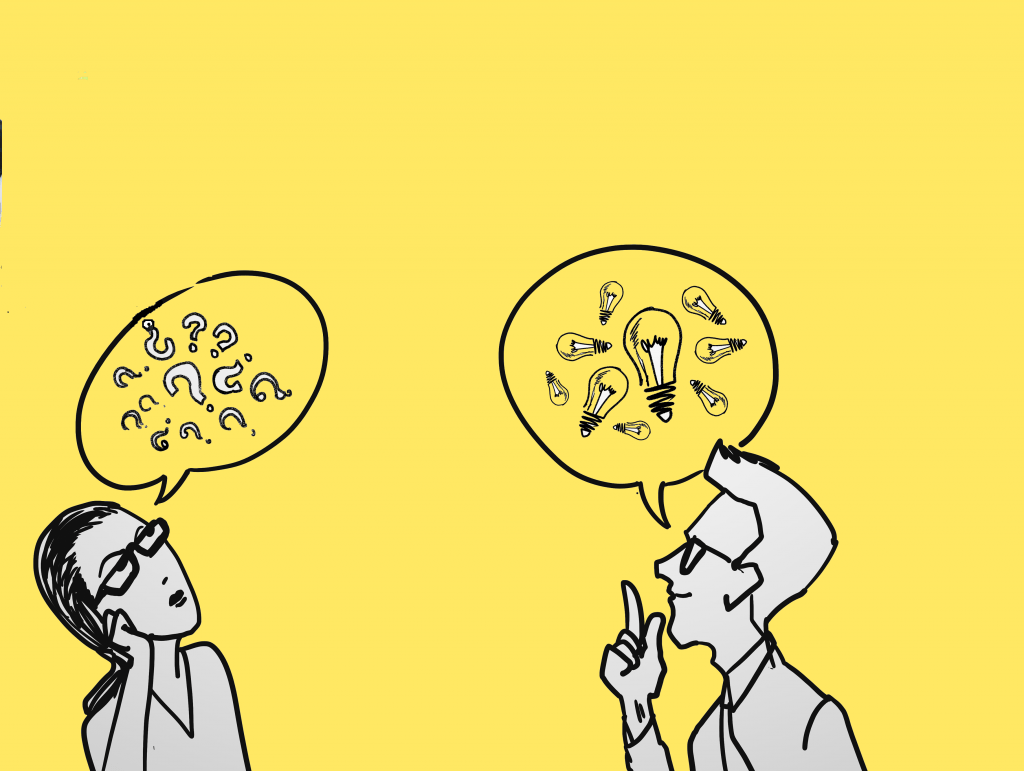
Feb 24th
I’ve been thinking and writing a lot about the evolving role of content in the marketing world — from the challenges of the “physics” of social media marketing, to Coke’s bold vision for a content-based marketing strategy.
My friend Mitch Joel has also been pondering this topic. In a post entitled The Content Crash, Mitch states that the field has simply “become a pumping ground for a marketing message. Very few (companies) are thinking about utilitarianism marketing and even fewer are thinking about the overall experience.”
Content is advertising?
But here is the line in Mitch’s post that stung me: “It is my belief, that content is the new advertising.”
Wait a minute. People HATE advertising. Does this mean that people are increasingly hating our content too?
Advertising is a paid interruption in an otherwise pleasant stream of content. Is content becoming an unpleasant interruption in our lives, too? With this native advertising trend of craftily embedding paid messages in “free” content, are the lines hopelessly blurred so that content marketing is suspicious and meaningless? Are content marketers the new snake oil shills?
Mitch contends that for content — sponsored or otherwise — to work, it must be exceedingly useful. So what does that mean? What could a possible game plan be to become the signal instead of the noise in this overly-crowded space?
Here are four possible scenarios in a “post content marketing” environment.
Radical trust
It seems that when bloggers reach critical audience mass, most succumb to the temptation of taking money to pump paper shredders, luggage, weight loss programs or any other product willing to exchange a fast buck for audience trust. Once you cross that line, your content becomes an ad, not something that is exceedingly useful.
Here is a chart that I believes graphically demonstrates the impact of turning your content into an advertisement – the Alexa traffic rank of a blogger who began aggressively monetizing their blog through sponsored posts in 2011:
In just 18 months, the popular site has dropped from position 5,000 to 30,000. Other key metrics such as reach and pageviews have similarly dropped off the cliff. Of course this is just one data point and we can’t necessarily make a conclusion about absolute cause and effect, but I think a strong hypothesis is that this blog is hemorrhaging because it is no longer a trusted source of content. It is an infomercial.
I think one possible lesson as we look to the future is to create a content environment of radical trust. Once you become an ad, you can never go back. I think this chart demonstrates the business case for trust.
Content that learns
In Don Tapscott’s fine book Grown Up Digital, he makes the case that the Net Generation puts a huge premium on customization.
The Baby Boomers take technology for what it is and hope it works. Net Geners make the technology theirs. They want options. They love to customize, and even the option to customize makes a product more attractive.
Why would they want your news stream when they can create their own? How do we enable our content consumers to determine HOW, WHEN and WHAT they receive from us?
While we have rudimentary forms of aggregation available to us — by topic, by keyword, by author, for example — we need to create self-aware content that conforms to the immediate needs of our customers.
This is happening to a large degree with display ads. If you type an email in the gmail platform, the sidebar ads may change to reflect the topic you are writing about. Spooky when it comes to ads, but immensely useful when it comes to content. Although we are collecting vast amounts of information about our customers, we have yet to unleash it in a way that is relevant for a moment in time.
An example: A reader of {grow} has just visited Stanford Smith’s blog and searched about blogging fundamentals. When she comes to {grow} she is offered a suggestion of similar topics, in addition to the latest news from my site. Or perhaps readers help the process along by choosing the precise topics they want to see and the hourly, daily, or weekly level of delivery for those topics.
Content that pays
I think we are on the cusp of seeing a merging between content marketing and the gamification trend. Why not reward your most loyal readers with badges and award levels after completing certain tasks? A frequent flyer program for content.
Would you like to receive a Platinum Reward Level on {grow} after so many comments, shares or page views? I am already seeing some sites that are creating Foursquare-style badges and leaderboards for participating in site activities.
As it becomes harder and harder to cut through the web’s information density, isn’t it logical that companies would start paying you to view their information?
Making the leap to something entirely new
We are probably 24 months away from the augmented reality revolution. The Internet, and content, will surround us like the air that we breathe. There will be an opportunity to create content in an entirely different way — in three dimensions, in the moment of need, on voice command. Blogs, podcasts and even videos may seem old-fashioned. There will be a huge advantages and opportunities for the pioneers of this entirely new vision of content.
Beyond “overwhelming”
Here’s a dirty secret of content marketing. Today it is possible to win the inbound lead battle simply by being first and overwhelming, a trend I characterized last year as the content arms race. You don’t have to be great. You don’t even have to be good. And to some extent it is even possible to fake your way to the top. But that can’t last. The market will adjust. Something has to emerge that will trump strategies based on sponsored posts, social proof, and commodity content.
I’ve provided four scenarios but what are your ideas? How are you going to move your brand beyond the noise and become the signal?
Illustration courtesy BigStock.com
The ultimate content marketing challenge
Oct 30th
The other day I was a witness to content marketing murder.
I was eating breakfast in a hotel dining room which was partially occupied by a BNI networking meeting. A local marketing “expert” was describing how he propelled a new dentist’s office to the top of the Google rankings through his content marketing genius. His story went like this:
“I found that one of the most popular search terms in the dental category was asking about dental care for children. So we created three videos answering those questions. Then we made very small changes to those videos that resulted in 50 more videos. By placing them in many online channels, we actually created 300 different content placements from the original investment in three similar videos. We now own the first nine spots on Google for this search term.”
Here is the sneaky little secret of content marketing. You don’t need to have the best product or service to win. You don’t need to be the best marketer to win. You don’t even have to create the best content to win. You just need to be first and overwhelming.
This is something that bothers me about the SEO-driven content marketing system. There seems to be such a huge advantage to the first-mover who creates a steady stream of content that I’m not sure there is a cost-effective way to catch up. I know some commenters will say that the key is to create even better content. But we all know that better content can’t win if it can’t be found in the first place.
So here is the ultimate content marketing challenge — what if you DO have the best product but you’re second to market? How do you cut through the persistent clutter of determined SEO gamesters to even have a chance in the search ranking war? What if you’re very late to the party and you’re getting your ass kicked?
Image courtesy BigStock.com


You’re in marketing for one reason: Grow.
Grow your company, reputation, customers, impact, profits. Grow yourself. This is a community that will help. It will stretch your mind, connect you to fascinating people, and provide some fun along the way. I am so glad you’re here.
-Mark Schaefer

