

Posts tagged future of facebook
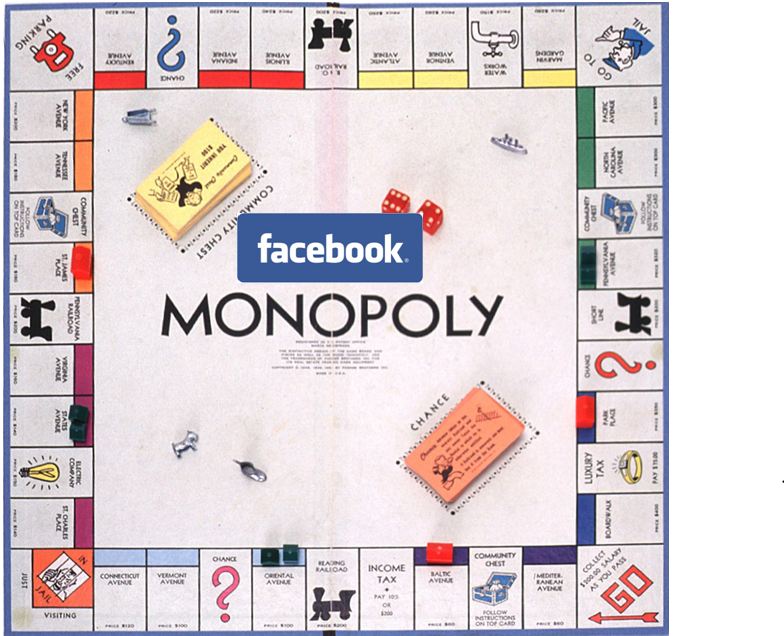
A plan to challenge the Facebook monopoly
Mar 17th
A very frequent question I am asked is “What will be the next Facebook?”
For many people, the logical assumption is that a better product will come along to replace Facebook because MySpace bumped AOL and Facebook bumped MySpace and so it is inevitable something will bump Facebook in the foreseeable future. That logic is incorrect and I will explain why. However I do think Facebook has a seam of vulnerability and could be trounced, and I will riff on that too.
But before we get to that, let’s first explore why Facebook is seemingly invincible, despite rumors to the contrary. Let’s look at Facebook’s obvious flaws … and why they don’t matter.
1) Somebody will build a better technology. But who cares?
What you must first understand is that technology did not make Facebook the biggest media entity in the history of the world.
Facebook is not a “technology.” Facebook is not a website. Facebook is a lifestyle. So you need to shatter your image that some technological tweak is going to unseat Facebook. Arguably Google Plus is a better mousetrap and it has not made a dent in Facebook’s growth.
To unseat Facebook you have to focus on creating a lifestyle alternative that is cooler than Facebook. Now, how hard is it to change somebody’s lifestyle, their daily habit? Just about impossible. It is easier for people to move to a new house and a new city than to move away from their social network. So the first idea is, this is not about technology.
2) Privacy violations will be their undoing. Wrong.
Many people are waiting for a backlash against Facebook because of their arrogant approach to privacy. My question is, “why hasn’t it already happened?” Facebook was found guilty of misconduct by a U.S. congressional investigation and even this did not mitigate Facebook’s growth.
Privacy in our culture is like a lobster being boiled in pot. If you drop it in a hot pot, the animal will try to get out. But if you drop it in a cold pot and turn up the temperature slowly, it will allow itself to be boiled without a fight. This is what is happening to us all now. Unless some privacy violation affects us monetarily in this moment, there will be no critical mass of unrest to unseat Facebook because of privacy concerns.
3) People need choice so alternatives will appear. Not.
Choice is desirable for most consumer goods. We enjoy having choice on the breakfast cereal or shampoo aisle of the shopping center but not so when it comes to social media platforms. We don’t have the bandwidth to desire two Twitters or an alternative to LinkedIn. We already have platforms in those spaces that work just fine. And the social networking space has also been fulfilled for most people and we don’t need another one.
In fact, day by day Facebook’s stranglehold on the social networking space grows tighter. As they scale, add new features, win new patents, and solve the complex problems of serving a billion people, they are creating further distance between themselves and any challenger. In general, people don’t want choice in this space, which is why the monopoly persists.
So where will the competition come from?
Let’s go back and see where this powerful emotional attachment to Facebook came from in the first place. How did it become a lifestyle?
It’s hard to imagine but not long ago, Facebook used to be a very exclusive club. It was only used on college campuses by college students. You had to have a college email address to even have access and if that went away, you went away too.
So it was this limited, exclusive connection, this college coolness that first ignited the Facebook fever. And that is exactly what could unseat them now.
Facebook is now a public company trying to be everything to everybody. They are gaining ubiquity across every demographic and every corner of the world. And as they are working hard to be the social media channel for everybody (and their shareholders), they are creating something supremely excellent for almost nobody.
The only way to unseat Facebook is to go back to the beginning and create a platform so exclusive and amazing that it will attract the “cool kids” and thought leaders in junior highs, high schools and college campuses. That is where a new network will be born and I believe that is the only way a new idea will “tip.”
The biggest complaint I hear is that Millenials don’t like Facebook because their parents and even grandparents are on it now. Perhaps the time is right to give the cool kids what they want. An exclusive place of their own, limited to their own group. And by the way, when you hit your 25th birthday, you get kicked out.
Here’s the game plan if you’re a willing entrepreneur:
- Create an interface that is bold, conversational, and truly user-centric.
- Commit to serving the 25 and under crowd exclusively.
- Spend every marketing dollar you can muster aligning yourself with the under 25 crowd and their culture, sports, music, and Hollywood idols. Be the definition of cool.
- Don’t become a public company. The moment you do, your focus is on serving shareholders and quarterly financial results instead of customers. Your cool would be doomed.
So that’s it. Your plan to unseat Facebook. Now, who’s ready to get started?
The Disruptive Technology that will Replace Facebook
Feb 22nd
By Neicole Crepeau, Contributing {grow} Columnist
A few months ago, I published a post here with my prediction that Facebook would decline in popularity, and that it would do so, in part, because it doesn’t put users first. Some disagreed with my assertion that Facebook as a destination would become a thing of the past. Here’s why I’m right.
When you’re the size of Facebook, the fall is a long one, so Facebook won’t disappear in the next year. The network is likely to experience a significant drop within the next five years, though. (We may even be seeing the first signs in Facebook’s recent decline in traffic and lower use among kids.) Why? Because Facebook doesn’t put its customers first, it is highly vulnerable to a new, disruptive technology.
Facebook’s main advantage over similar, competing social networks is the head start it gained, meaning it’s now the place where all of our friends and family are. We aren’t loyal to Facebook, though. The situation is akin to picking which bar to go to on Saturday night. You might have three bars to choose from. Two you really like. One is just mediocre. But all your friends are going to the mediocre bar. So that’s where you go, too. The company you’re with is more important than the place you’re at.
That’s exactly why Facebook is vulnerable, though. If it was creating a great user experience and constantly providing innovative, desirable features, it would be one of our top destinations. Since it’s not, if a few key friends start to go to another bar, we’re likely to start going there, too. The only thing keeping us on the Facebook website over another location is the other people on it. As more and more friends go to another bar, eventually there won’t be any reason to stick with Facebook as a destination.
All that’s lacking is that nicer bar that starts to draw people away: the disruptive technology. To understand the likely nature of that technology, consider the way that socializing and content discovery has changed over the years.
To date, it’s largely been a battle to be “the place” on the internet. Remember Yahoo and AOL? They were once “the place” to be. Called Portals, they were our entry to the Internet, and also to conversations via old-fashioned forums. Yahoo and AOL were displaced by Google. It offered us a different entry to the internet, via “key” words that unlocked access to websites through search.
Facebook then entered with a focus on relationships and conversations, the news of what is happening now with the people we care about. Facebook wants to be “the place” now. The result of this battle is that throughout the day, we switch between different places (Facebook, Twitter, Pinterest, etc.) checking in to see what’s going on. We’re constantly going from one place to another, and clicking links to go to smaller sites, which are also battling to be “the place,” at least in their own little niches.
Sounds tiring, doesn’t it? Isn’t there a better way? I predict there will be, and for indications of the new metaphor, you have only to look at your phone.
I have a Razor running Android. My phone buzzes when someone tweets to me or posts on my Facebook page, or when I get a text. If I feel like checking in, I can pull the top bar down at any time to see if new emails or tweets have come in. The Facebook and Twitter apps on my phone are more integrated into the device, making access easier. On my phone, I think less about going somewhere (Twitter or Facebook) to see what’s happening. Instead, what’s happening comes to me.
That’s the kind of technology we’ll see that will bring Facebook down. It’s why Google and others are investing in research on how to smartly predict what information and conversation you’ll want–so they can serve it up without you having to ask for it. The technologies being developed will bring content and conversations to you, and lead seamlessly from one to another, without you having to think about the particular technology or network on which the conversation is happening.
If the conversations and content from my friends came to me, I’d never go to Facebook.
Which is exactly why Facebook, Twitter, LinkedIn, and so on will fight such a technology. The battle we’re seeing between Twitter and Instagram is all part of the continuing fight to be “the place.” If people come to your site or use your app, you can display ads. That’s how these networks make money. If a technology bypasses the social network or app as a location, that revenue opportunity is lost.
So, the new disruptive technology will also bring a much-needed new ad model with it.
I have no doubt that we will see this disruptive technology within five years. It will be a new technology that offers a great user experience, brings content and conversations to users instead of making them go seek out the conversations, and provides content creators and smaller networks with a unique and more cost effective way to monetize. It will capture the smaller publishers and end-users first, and likely start on mobile devices before moving into the desktop. It will displace the Facebook website because it will fundamentally change the internet economy from a battle to be “the place” into a battle to be “the service.”
Neicole Crepeau is the Senior Marketing Manager at Vizit Corporation, and blogs at Coherent Social Media. She’s the creator of CurateXpress, a content curation tool. Connect with Neicole on Twitter at @neicolec


You’re in marketing for one reason: Grow.
Grow your company, reputation, customers, impact, profits. Grow yourself. This is a community that will help. It will stretch your mind, connect you to fascinating people, and provide some fun along the way. I am so glad you’re here.
-Mark Schaefer

