Posts tagged small business
The best advice I ever received for my business, and my blog
Jan 22nd
I was recently asked by an interviewer, “Who has had the greatest influence on your personal growth?” Pretty good question! But the answer was easy. In fact, there was one lesson I learned from one man that has had a profound impact on my approach to life, my business, and my blog. I’ll share that important lesson with you today.
Sensei and sensibility
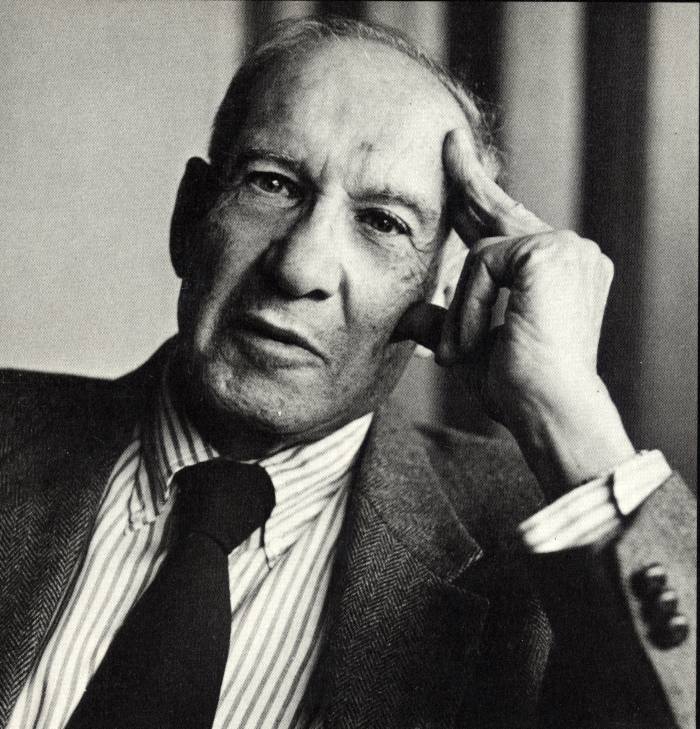
When I lived in Los Angeles, I desperately wanted to attend the MBA program at Claremont Graduate University for one reason – Peter Drucker taught there (in fact, the school was named for him). If you have never heard of Peter Drucker, discovering his books and articles might be the most important thing you can do for your career.
I applied for entry to the college, but was told I was too young to be accepted to this prestigious program. I would not quit that easily, however, and went through an appeal process, arguing that they needed my youth (27 at the time) to add to the diversity of the program! I made an unlikely stand on the grounds of EEO, which was quite a stretch, but incredibly, I was admitted! Perhaps my tenacity amused them.
Peter Drucker was one of the handful of people I have known who could distill vast complexity into simple wisdom. The scope of his knowledge was breathtaking. He would sit on the edge of his desk and lecture for three hours straight without a break, and without notes. He generally lectured about one of his books. My favorite was Innovation and Entrepreneurship a remarkable book that still holds up today.
A new approach to leadership
Professor Drucker taught via the Harvard case study method. We would be assigned to read a long, detailed, real-life business case and then dissect it in class to discover the true nature of how business worked.
The students in this class were high-flyers — the brightest business executives in the Los Angeles region — and they were always trying to “solve” the business case. Nothing made Professor Drucker angrier than that! “What makes you think you are smarter than the people in the case?” he would ask, “Smarter than people who have worked in this industry for decades? How can you be that arrogant?
“Your job as a business leader is not to provide the right answers. It is to provide the right questions.”
Over and over he would pound this truth into our heads until it became part of our DNA. And he was so right … so profoundly right. There is not a week that goes by that I don;t think of some lesson from Professor Drucker, but this was the most important of all.
Think of the power of leading people to the most effective solution, not by pontificating and telling them what to do, but by distilling the issue down to the essential question and letting them discover the answer themselves.
Adopting a strategy of professional humility is anathema to our modern Western culture. We may associate humility with weakness, when in fact it is strength.
The essence of blogging?
Like most young people starting out in business, I felt a need to know all the answers, especially when I was promoted to a leadership position. But from Professor Drucker I learned that being vulnerable, involving others in the process, coming up with a better solution together, sharing the weight of decisions – those are all benefits of humility. Being deeply human, instead of trying to wear the Superman cape, is powerful and liberating.
This is also a key to effective blogging I think. Most bloggers adopt a mantle of invincibility and that is certainly the easy path to take: “I publish, therefor I’m correct.”
But being a humble blogger leads to meaningful social media engagement and ultimately, crowd-sourced wisdom. I almost never have the answers. But I think my blog posts do present the essential questions: Does every business need a social media strategy? What is the value of social media engagement? How do we measure success?
And then YOU provide the answers through your comments. A much better system, don’t you think? How could I possibly sustain this blog for the last four years by only giving you answers? Nobody is that smart.
I hope this resonates with you in some small way. How does this idea land on you? Could being a humble leader become a key to making you a better leader, a better parent, a better blogger?
Photograph courtesy Claremont Graduate University
Link to Innovation and Entrepreneurship is an affiliate link.
Thought-provoking social media trends
Feb 4th
The Economist is one of my favorite magazines. I usually read it cover to cover. So imagine my excitement when I saw their special report this week, Social Networking: A World of Connections.
After I read the report, I concluded — to my surprise — that there was really not much new in the report. This is not a negative reflection on The Economist. I believe it’s a positive reflection on the efficiency of Twitter to stream the most important news and trends my way before they get summarized by a business periodical.
Nevertheless, there were a few interesting nuggets I wanted to pass along:
>>Follow me on Twitter signs are appearing on the doors and windows of small businesses around the world. Asurvey found that 17 percent of Britain’s small businesses were using Twitter. They saved an average of $8,000 a year by cutting out other forms of advertising.
>> A survey of 1,400 chief information officers conducted last year by Robert Half Technology, a recruitment firm, found that only 10 percent of them gave employees full access to social media networksduring the day, and that many were blocking Facebook and Twitter altogether. The executives’ biggest concern was that social networking would lead to “social not-working.” Some bosses also fretted that the sites would be used to leak sensitive corporate information.
>> An astonishing amount of time is being wasted on investigating the amount of time being wasted on social networks. One study estimated that personal use of social networks during the working day was costing the British economy almost $2.3 billion a year in lost productivity. Another concluded that if companies banned employees from using Facebook while at work, their productivity would improve by 1.5%.
>> The magazine described Facebook’s “hacker culture.” Their head of engineering’s motto is “move fast and break stuff.” What matters is getting fresh products out to users quickly, even if they do not always work as intended. To generate new ideas, they hold all-night hack-a-thons to at which engineers work on their pet projects. This Red Bull culture maybe why Facebook has just one engineer for every 1.2 million users.
>> Survey of 300,000 Twitters users showed more than half tweeted less than once every 74 days and 10 percent of all users account for 90 percent of all tweets.
>> Facebook’s audience is bigger than any TV network that has ever existed on the face of the earth.
>>In Asia several social media companies such as Japan’s GREE, South Korea’s Cyworld and China’s Tencent, are already making healthy profits from sales of games, premium personalization options, virtual goods, and custom backgrounds.
>>Salesforce.com predicts that demand for corporate internal social networking services will riseas managers realize that they now know more about strangers on Twitter and Facebook than they do about the people in their own companies.
>>Intel estimates it has saved millions of dollars a year in fees by recruiting senior managers through LinkedIn rather than using headhunters. US Cellular said it saved more than $1 mm last year by using a LinkedIn system that produced good candidates faster than traditional recruitment channels.
>> Social networks have made the labor market more transparentin another way too. A survey by CareerBuilder.com of 2,700 executives last year found that 45 percent of them looked at job candidates’ social network pages as part of their research, and more than a third of those had unearthed information that put them out of contention. Time to turn up those privacy settings?
Some interesting stuff! Of these facts and trends, which jumps out for you as having an impact on the way you do business?
Illustrations: Part of The Economist report.
Are you the executive producer of your dream?
Jan 29th
Last week I attended a premiere of a wonderful film called That Evening Sun. I live in Knoxville, TN, which is 2,191 miles from Hollywood. We don’t attract too many premiers around here. This one was special because the film was produced and filmed about 10 miles from my home and the making of it is a story that may inspire you.
That Evening Sun was the first film by a new company, Dogwood Entertaiment, and executive producers Larsen and Adrian Jay. Like so many triumphs, it was born of tragedy. In 2007, Larsen, a successful media executive and entrepreneur, sustained severe injuries when he fell off of a roof. Being confined to a wheelchair gave him a lot of time to think about his life and what he was really accomplishing. “Life is too short,” he said in an interview. “I know that all too well now.”
After multiple operations, he arose from his wheelchair with a new passion to achieve his dream of making a feature film.
Larsen and Adrian made their dream come alive with fierce determination and keen business maneuvering. They raised the necessary capital, partnered with executives in Los Angeles, and filmed a feature-length film in 22 days. Best of all, they delivered an award-winning film that has legitimized their venture and launched a bright new company.
Larsen and Adrian inspired me to think a little bigger about my own life and career. Heaven forbid it should take a life-altering injury to be a catalyst for change.
What if you viewed yourself as the executive producer for YOUR dream? Could you assemble the resources and create it in 22 days? Could I do it? Would I do it? How about you? Would it take a catastrophe to even give us the time to dream these dreams?
P.S. Click on the picture to see the movie trailer, and don’t miss a chance to see it. Hal Holbrook deserves an Oscar nomination for this!
The five questions small businesses need to ask about social media marketing
Jan 7th
I’d like to start with an excerpt from a a recent Gregg Morris post. This is an email from one of his associates, expressing frustration at an inability to convince small businesses to engage in social media marketing:
Social networking is making zero inroads into any of the businesses (SMBs) we have visited and interest in “mining” those networks is similarly zero. It’s not that they are rejected as future possibilities, but rather that SMBs haven’t time for it, since they sense the costs far exceed the benefits … The facts are the facts – SMBs are still the same as they always were: overworked, scratching for dollars, but now fighting even harder for market share. They are competing not just with local competition but also with online, distant suppliers and, of course, big box retailers.
To the point: Joe average – architect, restaurant owner, retail store – are not stupid, nor are they unaware of the need to handle their customers better. All I see … is the same, stupid Social CRM Expert-type of messaging. A bunch of esoteric bullshit skimming the surface of the problem, with no real solution offered. Everywhere I look, they all say the same thing: “You have to communicate with your customer…”, “you need to serve your customer…”, “you need to do this, that or the other…”. Lots of “you needs”, but few “here’s exactly how”
This little rant hit a chord for me because I teach a social media marketing class for small businesses and I constantly hear these same concerns.
There is a business cultural gap that is keeping many SMB’s from working this channel: Typical SMB ”advertising” is a hand-off. All the work is done by an ad agency and/or the advertising sales people. There is little personal time expenditure and the cost/benefit is usually easily measurable. Not so with social media marketing. There is more hands-on doing and the results may not be immediate.
When I consult with small businesses, I recognize that for many, the time commitments and demands of maintaining a consistent, effective presence seems overwhelming so I help them cut through the hype and FOCUS. I encourage them to consider five very practical questions:
1) Do I know enough about social media marketing to make the right decision for my business? Not knowing the possibilities would be the same disadvantage as operating a business without knowing such a thing as television advertising existed.
2) What is mybusiness strategy and how could a social toolkit align with my key initiatives?
3) Are my customers using the social web?
4) Are my competitors using this channel, and what are the competitive implications if I decide to participate or not? Could I create advantage by being an early adopter?
5) Do I have the resources, or can I acquire the resources, to conduct limited, focused experiments to see if working through the social web can provide a cost-benefit exceeding traditional advertising?
After my students walk through these questions, they usually conclude a) yes, this is something with a lot of potential and b) there are practical and manageable methods to approach this if I stay committed and focused.
Does this make sense to you? What is your experience with SMB’s and the social web right now?
{grow} community alert: Pete Mosely, a frequent contributor to {grow} has a new eBook out on promotion fundamentals which is a nice companion piece to this blog article.


You’re in marketing for one reason: Grow.
Grow your company, reputation, customers, impact, profits. Grow yourself. This is a community that will help. It will stretch your mind, connect you to fascinating people, and provide some fun along the way. I am so glad you’re here.
-Mark Schaefer