Posts tagged social influence marketing
Three dazzling examples that turned online influence into offline results
Apr 16th
There has been a lot of talk about finding powerful word of mouth influencers who can help your business. But once we have identified these influencers, what do we do about it?
Today, I’m going to dazzle you with three examples of people who are setting an awesome example in this area. But first, let me set the stage with a little diatribe about how almost everybody is doing it WRONG.
For some businesses, I have been designated as an “influencer.” Tragically, none of these businesses sell beer, cars, or bacon, but that’s another story.
As an influencer, I am deluged with offers from urgent strangers through email and Twitter every day. If this is your business strategy, here is the probability that I will connect with you and help you: ZERO. In fact, I won’t even open the email.
On the flip side, I will go out of my way to help friends who make an authentic attempt to relate to me as a person and build a relationship. It seems so simple, but 99% of the businesses out there are doing it wrong.
Here are three success stories that I hope will resonate with the thousands of companies out there trying to jump on the influencer bandwagon!
Mining the halls
Last year, a fellow literally came sprinting down a hallway at a conference where I was speaking. “Mark! Mark!” he said. “I just wanted to meet you and say hello. I am a big fan of your blog.”
We had a pleasant conversation and when he learned that I was visiting Europe soon, he invited me to have dinner with him in his hometown of Dublin. Which I did!
The dinner led to a tweet-up, the tweet-up led to significant new business opportunities, and the new opportunities led to new customers. For the fellow, I provided a free speaking engagement for him in Ireland, invited him to guest post on my blog, and he secured a coveted speaking slot at Social Slam a few weeks ago — his very first speaking opportunity in America.

Social Slam panel with Dino Dogan, Dawn DeVirgilio, Jennifer Kane and Ian Cleary in his American speaking debut.
You may recognize the now familiar name of Ian Cleary as the person I’m discussing. But this was no isolated or random incident. Ian is a master of converting online relationships into powerful business benefits.
At the recent Social Media Marketing World event, I ran into Ian and asked him how many sessions he had attended and he said “none.” At first I was surprised.
“I’ve been in the hallways,” he said. “That’s where the conversations and relationships are taking place.”
Ian was working hard to turn the weak links of social media into the strong ties that convert into business opportunity. His personal brand is growing quickly through the effort he is putting into his new friendships.
“If there’s someone I really want to form a relationship with, I focus on how I can help them,” he said. “Everybody is looking for ways to USE the influencers but if you can turn this around and truly help them, that makes it much easier to build a relationship!”
Paddling his way to community engagement
One of the brightest and friendliest of my new connections is an entrepreneur named Andre Niemeyer. Andre, who has been a member of the {grow} community for a couple years, immigrated from Brazil as a college student and has successfully carved a niche for himself in the hyper-competitive digital marketing space in southern California.
He is talented of course, but I believe he stands out in his market through a heart that is authentically kind.
Before the San Diego Social Media Marketing World Conference, Andre put out a Facebook and LinkedIn message to all attendees: “If you’re coming in a day early, I would love to teach you how to paddle board. Would you like to try this with me?”
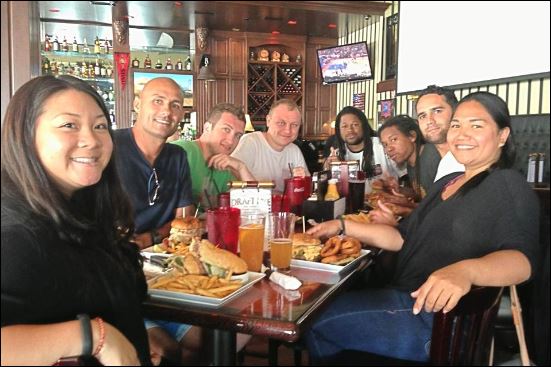
“They didn’t have to provide anything,” he said. “I had all the boards and paddles. Seven people turned out. We had a great time paddle boarding, which led to dinner and meaningful discussions. Although there were 1,000 people at the conference, every time we saw each other a smile came to my face and we would talk about the ‘paddle meeting.’ At a conference that large, social transactions often ring hollow. That paddle board group changed that for me and, I believe, the rest of the crew.
“Several members of the group described the activity as the highlight of their trip. I couldn’t be more humbled by that, since my purpose was to show some San Diego hospitality and offer an opportunity for more meaningful community building.”
Andre is authentically helpful and in a noisy world, people are attracted to that above anything, I think.
Awareness through conversation
While I was in California, I was invited to an “influencer dinner” at a well-known steakhouse sponsored by the company Sprinklr. I was skeptical of being cornered into some kind of sales pitch but decided to attend because frankly, I like steak. Also, I like Jay Baer and I saw that he was attending so I thought, What the heck? I perceived real potential value in the two hours of time this would take and decided to check it out.
It turned out to be a very valuable event. I had an amazing conversation with Intel’s Ekaterina Walter, became friends with Paolo Elizaga of P&G, and got to tap into the mighty brain of Lee Odden.
There was no sales pitch from Sprinklr. However this was a very effective influencer event because relationships with companies are formed through interactions over time. I got to meet the folks from the company and I have a positive feeling about the nice environment they created for a group of social media thought leaders. So now, this company is on my radar screen.
Am I willing to open an email from them? Yes. And that is a big step forward, right?
The networking expert. Not.
Making personal connections that result in business benefits is a nuanced art. Here’s an example of influencer marketing that backfired.
While I was attending the conference in San Diego, I received a hand-written note under my door with some chocolates. The author of the note expressed a desire to meet me at the event.
I had no idea who this person was — had never even heard his name before. I felt a little creeped out that a strange man had found my hotel room number and was sending me candy under the door.
It turns out that this fellow was a professional “networking expert.”
He eventually cornered me and asked if I could do a video interview for his site. I was happy to oblige but it became apparent that this fellow really knew nothing about me, nothing about my books, nothing about my business, and could not even put together a meaningful question to ask me. My perception is that the video was a ruse — like the candy — to provide some nominal value that would make me feel like I needed to reciprocate. Sure enough, when the “interview” was over, he wanted to talk about “next steps.” I left feeling disappointed and used.
The difference
Do you see a pattern in the successful interactions?
1) The social web is an amazing opportunity to create small interactions that lead to larger engagements — meaningful relationships and business opportunity.
2) Turning online connections to offline relationships transforms weak links into strong bonds.
3) Offer true helpfulness and real value. Actionable relationships are earned, not bought. We’re not idiots. We know when we’re being used.
4) At the end of the day, we do business with people who we know and trust, not somebody who is trying to game us. Trust is paramount and needs to be at the foundation of your social networking strategy.
I believe social media (and specifically Twitter) is personal networking on steroids. But the basics remain the same. You still have to earn attention and trust to turn a weak link into a powerful one.
What do you think? How are you networking on the social web? Please add to the conversation!
Reflections on social media power and influence
Mar 19th
I wrote my first blog post about Klout about two and a half years ago. At that point, it was little more than another obscure social media start-up fighting for attention. Over the ensuing months, I wrote follow-up posts that criticized Klout and its competitors for some of the embarrassing mistakes they made.
But I grew fascinated by this topic of social influence. How DOES a person become powerful and influential on the Internet — an alternate universe that HATES any form of authority, titles, or rules? The more I studied and thought about this, the more interesting it became. I eventually wrote a book about the subject called Return On Influence, which launched exactly one year ago.
I studied this topic of online influence intensely for a year. I read books, academic research, and white papers. I interviewed more than 70 people ranging from brand managers and mommy bloggers to Dr. Robert Cialdini, arguably the leading expert on influence in the world and the author of the seminal work Influence: The Psychology of Persuasion. I got to peek inside Klout (at that point virtually the only game in town) and talk to its customers. And here are the three conclusions I made:
1) This is a historically important time where personal power has been enabled through our ability to publish on the web.
2) The nature of power and influence in the online world is vastly different than what we are accustomed to in the offline world. It’s important for businesses and individuals to understand this — your paradigm has to shift.
3) Klout is on to something.
A year later, I’m very proud of the acclaim the book has received from the press, reviewers, and thousands of readers from around the world. I haven’t written on the topic of social influence in awhile and I thought I would reflect on what has happened in the field since the book came out.
The good.
Moving the debate along — It has been great to see meaningful debate emerge from the book as people begin to understand the changing nature of influence. There have been some great blog posts examining the potential for corruption of these scores, the difference between advocates and influencers, and creative new ways these tools are being incorporated into traditional marketing. Almost every marketing conference now has some element of social influence discussion on the agenda. Some of the more interesting topics include:
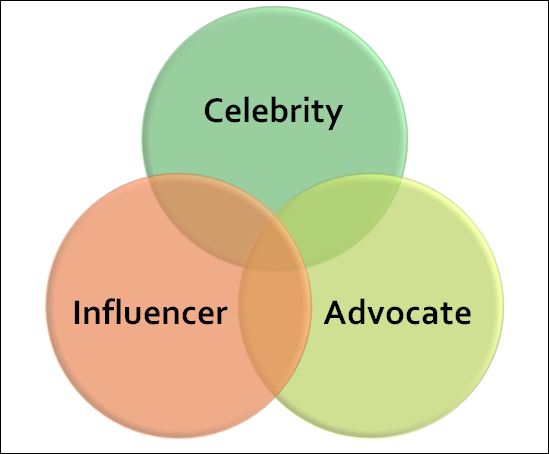
- What are the differences and relationships between advocates, influencers and fans?
- How do we connect influencer outreach initiatives to measurable business gains?
- How can we integrate influencer data into traditional marketing initiatives?
- Now that we can find these legitimate influencers, what do we do with them?
New technical development — A group of new companies has emerged to challenge Klout, the acknowledged market leader. Some of them have been niche knock-offs, but others, like Appinions, offers breath-taking new opportunities for marketing insight and innovation. Appinions digs deep below the surface of mere social media input, leveraging patented Cornell University technology to cull insight from 5 million online sources. Now this is getting interesting!
Stabilization — Klout and its social influence comrades have the unenviable task of scaling fast and iterating in public. Being publicly scored and evaluated pushed a hot button with a lot of people and a rash of PR gaffes seriously hurt the credibility of the genre to the point that people could not get past the damage to rationally assess the potential of the technology. Thankfully a lot of that drama is in the past. Scores have slowly stabilized, scamming has been addressed, and the focus is on progress instead of PR spin. The debate is generally becoming less emotional and more intellectual, although many people are still rolling old tapes.
New commercial development — Nearly all the major social influence programs are finding footing with customers. Klout announced new partnerships with Microsoft and ESPN. Kred has introduced a dizzying array of features that slice and dice scores a dozen different ways. PeerIndex has evolved to become a UK-focused discount shopping site. Appinions is gaining ground with a subscription model. Almost every PR, advertising, and marketing firm is trying figure out how these useful new tools can be integrated into marketing campaigns, or even coming up with versions of their own. The idea of “social influence marketing” is moving into mainstream marketing budgets.
The bad.
The social influence feeding frenzy — In the past 12 months there has been a feeding frenzy of misguided PR and marketing people trying to hook up with “influencers,” in a desperate attempt to ride the wave. As somebody typically on the receiving end of this behavior, I can say that 99% of the activity is crap. I especially feel sorry for the most popular mommy bloggers who are deluged with offers and incentives. Everybody wants a piece of an influencer but most are clueless on how to do it well. It’s still about relationships, folks.
The Klout Addicts — There is an underground network of folks supporting each other’s Klout addictions. They are obsessed with elevating their scores and doing whatever it takes to grab more valuable loot. Swag-grabbing is harmless good fun, but I’m not sure what a connection with these folks really does for creating business results. I’m guessing the brands are starting to figure this out? This is one of the potential dangers I pointed out in the book and it seems to be coming true.
The Klout Echo Chamber – There are still a number of folks out there regurgitating the same tired, out-dated, and irrelevant criticisms of social scoring companies. As they repeat their rants among themselves, they have simply created their own Echo Chamber. The biggest problem is that these folks are stuck in an “offline” framework of power and influence or haven’t bothered to look beyond their emotions to understand the theory and psychology behind the scores. Some of the wearisome rants include:
- “Klout is just stupid and doesn’t measure anything.”
- “Justin Bieber has a higher score than Warren Buffet so that proves that Klout is meaningless.”
- “Klout says I’m influential about grapes so that proves that it is worthless.”
These were perhaps valid commentaries at one time but today it is simply running old tapes. Here is what a Klout/Kred/PeerIndex score provides: An indicator of a person’s relative ability to create content that elicits online sharing and reactions. A company like Appinions further applies these scores in the context of topics, themes, and sentiment.
No more, no less.
Like credit scores, social influence scores are imperfect and not necessarily an indicator of future behavior. And yet, both of these indicators are useful. How many careers today are dependent on a person’s ability to effectively move content on the web?
How am I influencing you right now?
It’s likely that you know little (or nothing) about me as a person. I’m not an “influencer” in a traditional sense in that I have any power over you through a title, an elected position, or an organizational chart. And although I can’t tell you what to do, you may actually take some action after reading this post. Will you tweet it? Forward it to a colleague? Save it for later? Will you spend your precious time to comment on it? Have I even changed your view or attitude? Made you angry? Made you interested enough in the subject to explore the book?
My source of power on the web comes from essentially one place: Having an ability to create or aggregate content that is shared and creates a reaction. Without having the ability to create and move content, most influential bloggers you admire today would probably be toiling in a cubicle someplace instead of speaking on a global stage.
In this limited context, does a social scoring number like a Klout score make sense? Can Brian Solis create and move content better than me? Yes. Can I do this better than many of my students? Yes. Social scoring is far from perfect, but over time, this is the valuation that is beginning to be refined – a relative ability to move content. And that is very limited, but also very useful to many companies and brands who want to find people who can create buzz on a topic or product.
In conclusion …
Thank you for supporting (or debating) these new ideas over the past year. I hope there are two main lessons you took away from the book:
First, this is an amazing time for everyone to find their own online power, their return on influence. It doesn’t matter what college you attended, the color of your skin, or how much money you have. You can publish on the web and you can find your own power. Now, what are you going to do about it?
Second, I encourage you to be a critical thinker and cut through the emotionality of a company that purports to measure your influence. Yes, that might seem distasteful. It’s icky to me too. But as a business professional, we must move beyond the noise of the debate and look for the signal. Take a clear-headed look at the real dynamics of online influence and the implications for you, your brand, and your business, and make an informed decision.
Disclosure on companies mentioned in this post: I have never received a gift or “Perk” from any social scoring company. I accepted a dinner from the president of Kred in 2012. Both Klout and PeerIndex provided Return On Influence as a premium to their customers in 2012 as part of a promotional deal with my publisher McGraw Hill. I have indirectly provided paid counsel to Appinions as an adviser to one of their outside marketing agencies. I provided unpaid marketing counsel to Dr. Cialdini’s company. Links to books are affiliate links.
Florida State University class using Klout to determine student grades
Aug 26th
By Todd Bacile, Florida State University
“Thirty-five” was the answer to the following question posed to a marketing agency’s hiring manager: “What is the minimum Klout score a college student can have and still be considered for an internship at your firm?”
I immediately went into a state of shock — Shock that Klout has gone mainstream so quickly, and shock because my digital marketing student’s Klout scores typically range from 15 to 25. As an instructor, I had to ask myself: “Am I doing everything I could to prepare my students for the real world workplace?”
Most people seem to either love or hate Klout, so the notion of assigning a portion of a student’s grade to their respective Klout score may cause some to react … what’s a good word to use here … fretfully. Yet, as an educator teaching electronic marketing at the collegiate level I owe it to my students to introduce them to every and any concept that will help them land an internship or fulltime job.
Klout matters to employers
And here is an inescapable fact. Many firms are sizing up college student’s Klout scores as a quantitative metric to use for job applicant screening. Therefore, I decided to create a class project in which the final grade earned is solely determined by a student’s Klout score.
This class project familiarizes students with Klout by having them engage with others via Facebook, Twitter, LinkedIn, and blogs. Students within my e-marketing class were already familiar with the terminology and nuances associated with various social media sites. By creating an experiential Klout project, students would now be able to apply social media engagement concepts and strategies to raise their Klout score, and ultimately, raise their grade. By the way: this may also help them land an internship.
The results have been phenomenal over this past year. The average Klout score of 16.7 at the beginning of my fall class’s project dramatically improved to 39.1 by the end of this project. Similar improvement was seen in my spring class’s project, with the average Klout score beginning at 19.3 and ending at 43.1. In both sections several students achieved scores well into the 50s, with a high score of 58.
A plan to model social media engagement
How did the improvement in scores happen? I had them game the system! Just kidding – I had to say that to upset some of the anti-Klout people who may be reading this post. In all seriousness, I simply reviewed Klout’s explanation of key scoring criteria and applied basic concepts recorded in the book Return On Influence. The idea is not to just accumulate a large following, but also to get other people to share and respond to content created by the students.
I then lectured and illustrated how the students can engage others via social networks — creating content people will want to comment on, asking relevant questions to key opinion leaders, and other methods used to engage in social conversation with others. These engagement skills are what many firms are seeking in social media marketing interns and entry-level positions that my students are hoping to land, making this an ideal project within the classroom.
An experiential project like this proved to be enjoyable for the students and maintained their attention and enthusiasm throughout the semester. Many students would compare scores and discuss different techniques used to engage with powerful opinion leaders within the social world. Which students had higher scores became a friendly competition causing students to work even harder at engaging others. Imagine that: students wanting to work more to develop skills that current marketing employers are searching for!
Benefits of the project
There are three key benefits this project produces.
1) Improvement to Klout scores that will help students during job application screening,
2) Hands-on experience engaging with others via social media by using specific functionality within different social sites.
3) The project overcomes recent criticism that business schools within higher education often fail to develop relevant skills.
Social media jobs are increasing and this project was a fun, entertaining, and interesting way to get my students to learn social media engagement skills. What are your reactions to this project to immerse students in social engagement?
Note: This blog post created quite a dialogue on both blogs and traditional media. Author Todd Bacile responds to the attention in his own blog post.
Todd Bacile is a doctoral candidate in marketing and the instructor of Electronic Marketing in the College of Business at Florida State University. A ten page research paper describing his Klout project will be featured in Marketing Education Review’s spring 2013 issue on teaching innovations. You can follow or contact Todd on Twitter @toddbacile
Kred tries to one-up Klout by taking influence to the masses
Aug 21st
Kred, a platform to measure social influence similar to Klout, just introduced a new interface called “Story” with several very interesting new features. It is so graphically-intensive that I wanted to provide a video (below) so you can experience the changes first-hand. In my view the overhaul provides some valuable new tools for marketers interested in influencer marketing (and you should be).
Click here if you can’t see the video of Kred Story.
So what does this mean to you? I see at least two interesting business applications of the new “Story” format.
First, this puts some useful, free tools into the hands of small businesses and brands. So far Klout has really been the domain of big brands fortunate enough to be able to experiment with Klout Perks. One of the questions I am often asked is, “OK we understand this marketing trend, but we’re a small business. How do we find these influencers?”
Kred has come up with some very nice free or inexpensive features so that many businesses can find topical influencers by geographic location.
A second benefit I see (which may not be even be apparent to Kred) is the usefulness of seeing the most shared content by category and the influencers behind the sharing. This could be an extraordinary tool for curating top content.
When I previewed the new Kred offering, there were still a few pretty strange bugs in the system, but honestly that doesn’t bother me as much as other people. We are watching an entirely new marketing channel unfold and iterate in public — a pretty extraordinary business model. So I am more focused on the trend and the opportunities than short-term things that look might appear silly.
I had an opportunity to ask a few questions of Kred CEO Andrew Grill about this latest round of social influence innovation:
Mark: I imagine that it is difficult creating sustainable points of differentiation in a field where there really is no intellectual property protection. In other words, you are probably in a cycle where competitors simply continually copy each other. How do you compete in an industry like that?
Andrew Grill: When we gained access to the Twitter firehose back in 2008, we developed our architecture to be able to handle the masses of data that come from sources like Twitter, Facebook, and the ever-growing social networks. We’ve developed IP (Intellectual Property) and know-how around receiving and ingesting big data.
We are the only influence provider that is generating scores in real time. We also took the decision to be open and transparent from day one, by not only publishing exactly how we derive the Kred scores, but also showing on every one of the 120 million Kred profiles the effect of interactions on the scores in real time. No-one else has decided to be this transparent – something that sets Kred apart from other platforms.
Mark: What is Kred’s R&D cycle? How often can we expect to see major updates like this?
Andrew Grill: We iterate fast. Kred was built in just three months, and the build time for Kred Story was even faster. Small enhancements to the site based on our valuable community feedback are added into the development cycle on a weekly basis. Customers also benefit from our quick R&D cycle as we can build custom versions of Kred elements extremely quickly.
Mark: One of the things many people don’t understand is that you have no choice but to iterate in public. There is no way to test enough ahead of time to be able to predict everything that might happen when you flip the switch and a million people hit your servers. From a business standpoint, how do you gear up for the inevitable fire-fighting when you make a major change like this?
Andrew Grill: Having an amazing technical team who work around the world in multiple time zones means that we’re ready for anything. You are right that we have to iterate in public, and we are always listening to what people are saying about us and the product – feeding things back to the development team as we receive it. We love being in such an agile environment and industry – it makes us work harder to build the best possible platform we can.
We also utilize our network of Kred Leaders to seek feedback on new deployments. In addition, we have a round the clock community management team looking out for any issues and feeding them back to the team. As social media is real time, if something is not working, we hear about it pretty quickly through Twitter.
Mark: How do you project the Twitter API change will affect Kred and its new format?
Andrew Grill: We don’t expect any material changes to the Kred Story format to be compliant with the new API. We have been working with Twitter for four years now since we gained access to the full Twitter firehose and we have a great partnership.
*****************
Take a look at the demonstration video and let the {grow} community know what you think about it. Other than the features I’ve named here, what else do you like about this new interface?
Disclosure: Kred has named me a “Kred Leader” but I have not been active and maintain a neutral position in the industry. Andrew Grill bought me dinner earlier this year during a business trip.


You’re in marketing for one reason: Grow.
Grow your company, reputation, customers, impact, profits. Grow yourself. This is a community that will help. It will stretch your mind, connect you to fascinating people, and provide some fun along the way. I am so glad you’re here.
-Mark Schaefer