Posts tagged social media strategy
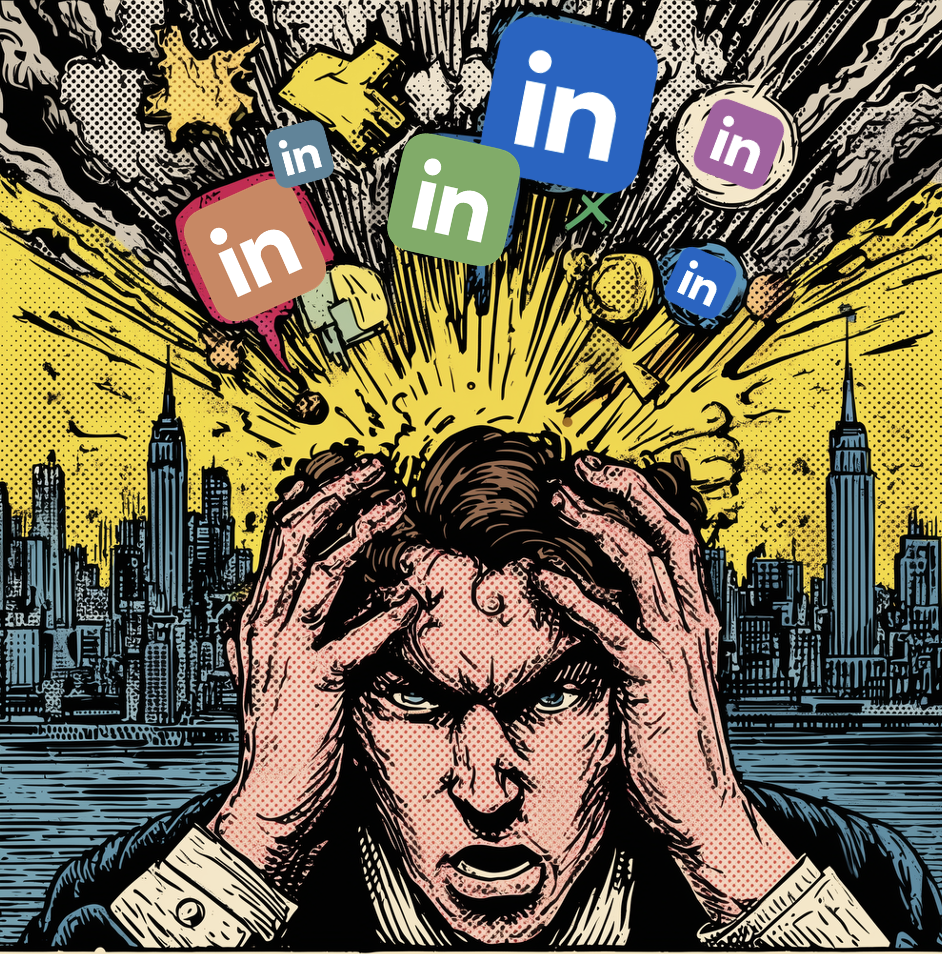
Five ways using “controversy” as a content strategy backfires
Apr 30th
I recently listened in on a webinar where a young guy was pontificating on the best strategies to build an audience for your content. A pillar of his presentation was “be controversial.”
This struck me as odd. Is “controversy” really a sustainable position for a content marketing strategy? The more I thought about this, the more I disliked this advice.
First, let me distinguish content that is “conversational” or “thought-provoking” from content that is controversial. A definition of controversial is “a state of prolonged, contentious public dispute or debate.” The keywords here for me are “prolonged,” “contentious, and “public.”
Sometimes controversy happens. Occasionally, it might even be unavoidable. But is this a tactic you should mindfully pursue as a long-term content strategy? Let’s take a look at five reasons why the answer is NO.
1) It is naive.
I have this image in my head. I walk into my boss and I say, “Hey, I just attended this webinar and I’m convinced that we need to be more controversial to be build our company’s blog audience.”
What do you think the reaction would be?
Can you think of any respected, successful company that pursues a prolonged dispute as a social media marketing strategy? Of course not. Companies are built to avoid controversy. Most brands are not built on a negative emotion.
2) It is exhausting.
Have you ever been in the middle of an online controversy? Nothing can suck up more time and energy from your day. Do you really want a strategy with that impact on productivity?
3) It is not sustainable.
Reading “contentious” content is like watching a train wreck. In short doses, it might be gruesomely compelling, but it is not something you want to expose yourself to every day.
Study after study shows that positive, uplifting content gets more views and clicks over time. Who wants a steady diet of prolonged disputes?
4) It drives the “wrong” traffic.
Let’s say you’re the playground bully. Every time you start a fight, a crowd might gather to see what’s happening, but then they walk away when the fight is over. The people who watch might even pretend to be your friend and say the right things but they’re never going to totally trust you because if the bully is chronically contentious, it is only a matter of time before they turn on you too.
Controversial blog posts are like a schoolyard fight. It might drive a short-term spike in traffic through the “fascination” value, but is it going to make somebody want to befriend you? Become a customer? Or, are they just going to stay on the sidelines and walk away?
5) It’s inauthentic.
Adopting “controversial” as a strategy is kind of like adopting “angry” or “love-struck” as a theme. If you are forced to aim for the same emotional tone every day, how do you avoid becoming a character instead of an authentic person?
So I hope some of this makes sense. I am NOT saying that you should never be controversial. If you bring your humanity to your blog, occasionally you may strike a chord in others that results in a dispute.
About 2-3 times a year I write a post that results in controversy. But my content strategy is not to purposefully churn up a dispute. My strategy is to be honest. And sometimes being honest requires the courage to say things that go against the grain of popular opinion and to take the heat that comes with it.
I’d love to hear your take on this in the comment section … at the risk of being controversial, of course. : )
How does controversy work for or against you?
How do you develop a strategy when the target keeps moving?
Apr 28th
I was watching a basketball game between a bunch of 8-year-olds the other day. The “red” team was winning 18-0, an insurmountable lead at that age. The “blue” team was exhausted and disheartened from the pummeling.
But within a heartbeat, blue’s luck changed. A speedy player intercepted a pass and steamed down the court, for a wide open lay-up.
The crowd held its breath as the young player effortlessly flipped the ball up and into the hoop. Of the wrong basket.
The crowd gasped. Tears welled up in the stunned player’s eyes as he realized his team’s humiliation was complete. He had scored a basket for the other team.
This sad little episode seems an apt analogy for one of the costliest mistakes you can make in a business: Having brilliant execution against the wrong goal.
When I first started out in business, my company actually required us to create five-year plans. That seemed like a difficult exercise back then and today that is simply impossible. And yet, it is easy to get locked into annual goals and work beautifully against them, never realizing they’re already out of date.
Business today is not like a basketball player trying to shoot at the right goal. It’s like a basketball player shooting at a goal that is moving.
I think this problem is especially acute for small companies and start-ups. I once had an entrepreneur tell me that the nature of his company changed every three months. It’s true. Simply adding a new employee or a new customer can radically alter the direction of the company. The nature of my work has changed dramatically in the past 12 months.
If you are still heads-down, working like crazy without taking the time to assess the world around you, you might be making a deadly business mistake. Here are five questions to reflect on:
- How am I spending my time today compared to a year ago? If there is a dramatic change, why? Is this a sign that the market is changing or have I lost focus on what makes me profitable?
- What is the biggest internal threat to my business? Is it resources? Keeping up with change? A lack of focus? Turnover?
- What is the biggest external threat to my business? New competitors? New expectations? Problems with the economy?
- How have my competitors changed? Do I even know who my competitors are right now?
- What are my customer’s under-served or un-met wants and needs? Do I think I know, or have I really asked them?
Spending just a little time reflecting on these questions could save you months of heartache down the road. What do you think? How are you coping with the constantly moving target of your business?
This post was written as part of the IBM for Midsize Business program, which provides midsize businesses with the tools, expertise and solutions they need to become engines of a smarter planet. I’ve been compensated to contribute to this program, but the opinions expressed in this post are my own and don’t necessarily represent IBM’s positions, strategies or opinions.
The future of business: Six layers of customer engagement
Apr 14th
Over the past few years I have been giving a speech about the “six layers” of customer engagement. It has been a hit with my audiences and it occurred to me that I have never shared this idea with you. So, let’s change that.
We are in the process of creating increasingly complex layers of digital distance between our companies and our customers. Mastering these six layers represent both enormous challenges and opportunities …
In the beginning
Historically, we dealt with customers face-to-face, with a trusted word and a firm handshake. Then in the late 1990s, with the creation of our first company websites, we took a one way ticket AWAY from these personal relationships and created the first, permanent digital divide between ourselves and our customers.
Year by year, this divide grew as companies found ways to cut costs and create customer delight by moving more and more self-service options to the web. We literally raced away from our personal relationships.
The second digital layer emerged just a few years ago as nerdy chat rooms bloomed into social networks. For many people, this became the preferred way to communicate, discover products and services, and connect with customer service. Time on websites went down, time on social sites exploded.
So for a business, we must now figure out how to connect with people in this new information eco-system and compel them to love us so much that they want to investigate our website, which is where the business takes place. After all this “socializing” we still need to get people to buy something right?
The third layer
The third layer is a social layer around all the other social platforms, and that is Facebook. You see, for many people today Facebook IS the Internet.
Yes, people love Flickr, but Facebook is the number one photo site in the world. We love YouTube, but millions of hours of YouTube videos are watched every day THROUGH Facebook. Does it seem like there is yet another layer going on here? There is. Even if we do a great job populating the social web with our content, that content is increasingly viewed through Facebook. So, our businesses need to be there.
But we’re just getting started.
The mobile layer
Today, more than half of Facebook’s users access the site over a mobile device … and that is increasing month by month. So even if we have a great website, even if we are populating the social web and optimizing for Facebook, we now need to do it in a way that works on a screen that fits in the palm of your hand.
Mobile represents the fourth layer between our customers and the money we would like to liberate from their wallets.
All of this is probably familiar to you and your business is already implementing a web design that is responsive for mobile. If your head is spinning about the rate of change so far, you’re in for an even greater shock. We are on the cusp of the most rapid and disruptive technological change in history – augmented reality. There will be a digital layer over the “real world” and the Internet will surround us like the air that we breathe.
Now everything changes
The Google Glass project is just the first volley in a revolution that will change the way we connect, learn, shop, communicate, and entertain ourselves. In fact, it will touch almost everything in our daily lives. It is not the new Internet. It will be something far more important and foundational — it will be more like the new electricity. The widespread adoption of augmented reality, first in glasses and then in contact lenses, will transform every way we connect and communicate. Your business will need to master this layer and all of its implications.
The virtual layer will liberate us from devices and open up dazzling new opportunities to create new businesses, new applications, new customer connections.
Now that we have a ubiquitous digital layer across the world, what do we do with it? Why, we have fun of course …
The sixth layer of engagement
People love to play games more than anything. The average World of Warcraft player spends six hours at the game. Wow. Six hours. Wow. What if a business could tap into just a little of that!
Smart businesses are trying to figure out how to do exactly that. There is a whole theory of game science that creates these addictions and it can certainly be applied to marketing.
Social, mobile, location, augmented reality … it all enables the game layer. Why not turn your customer engagements into a game with levels, achievements, and rewards? Today, the popular mantra is to create “utility.” But I think there is a limited amount of engagement a company can provide through some useful electronic connection. But there is no limit to the amount of fun that can be provided. We are a few years away from an economy based on fun.
Implications
If you think this through, and I hope you do, there are some important implications beyond the six layers:
1) Customers are going to leave a data trail on every level. The companies that can mine this stream will create powerful competitive advantage. That’s why, increasingly, marketing = math.
2) Not every customer will engage with you on every layer. That means your channel strategies are going to multiply.
3) With the premium on fun and entertainment, this means good news and rising rates for the best content creators and game developers.
4) Bring plenty of money. I don’t thing creating an augmented reality customer service department is going to be cheap.
5) For the companies that move first in these spaces there will be an unparalleled opportunity to create customer connection and loyalty.
Whew. Is your head ready to explode?
I would sincerely love your thoughts on this concept. What makes sense? What did I miss?
(Warning: shameless self-promotion ahead) If these ideas tantalize you, why not hire me to give you the full meal deal through a speech at your next company or industry conference? We’ll have a lot of fun with these ideas.
Do you need a massive audience to be huge in social media?
Apr 7th
Recently, my dear friend Kristen Daukas and I had an interesting exchange in the comment section about audience size and I thought it would be fun to blow it out into a blog post since it is such a relevant topic.
Kristen wrote:
“Content may be king but having a vast audience to accelerate the spread of the topic is queen and we know which one rules the castle. There have been several topics that I’ve written about that certainly have not gotten nearly the attention as a post of yours on the same topic. If you don’t have a vast audience to help spread your message for you, all the self-promoting in the world isn’t going to help.”
Well then. Does size matter?
In a {grow} first, I am actually going to answer the question and then prove myself wrong. You’ll just have to see for yourself.
Why size does not matter
One of my favorite case studies to illustrate the power of community is a family-owned bakery in Houston called Dessert Gallery. The business has a small but loyal Facebook following of less than 3,000 fans. However, a study by Rice University found that this audience was providing profound benefits to the bakery including:
- 36 percent more visits than non-Facebook customers
- 45 percent more of their dining budget spent at the bakery
- 33 percent spent more at the bakery than at other restaurants
- Greater emotional attachment to the brand
The owner successfully uses her Facebook page to gain marketing insight, address customer problems, communicate promotions, and get feedback on new product ideas.
This company does not have a huge Facebook following but the Likes they have MATTER.
Clearly, building a vast, global audience would simply be a waste of time for this business. As long as it attracts and retains loyal fans in its target business area, its small but mighty audience will be just fine.
So, in this case, growing a huge audience is not a priority. In fact it might even be a costly distraction for the business. Audience size is a function of strategy.
Why size does matter
I am now going to argue with myself. It happens.
In the online world the “social proof” of a large audience may be important because in our information-dense world, we’re starved for clues to help us determine leadership and authority. We readily look to “badges of influence” like number of Twitter followers or even Facebook likes to help us determine brand worthiness.
In some markets, there may even be a Facebook arms race as competing brands do anything necessary to gain the upper hand on this metric. I recently wrote a post describing a company who has an internal marketing metric of “cost per like.” On the surface, this seems ludicrous but it demonstrates how strategically important this symbol has become.
Icky. But true.
So in the bakery case study above, would this bakery be disadvantaged — ever so subtly – if the bakery down the street had 10,000 fans versus their 3,000? Hmmm.
Of course there are other reasons why size might matter if you are aiming for a global audience, and as Kristen said, you are actively trying to move content and build a personal brand. As long as the audience is relevant and real, bigger would be better.
So I hope I did not confuse you … but it’s a complicated subject. The bottom line is, start with strategy. Know who your customers are, where they get their information, and how you can be useful to them through your content. Then build appropriately.
What is your view?
This post was written as part of the IBM for Midsize Business program, which provides midsize businesses with the tools, expertise and solutions they need to become engines of a smarter planet. I’ve been compensated to contribute to this program, but the opinions expressed in this post are my own and don’t necessarily represent IBM’s positions, strategies or opinions.


You’re in marketing for one reason: Grow.
Grow your company, reputation, customers, impact, profits. Grow yourself. This is a community that will help. It will stretch your mind, connect you to fascinating people, and provide some fun along the way. I am so glad you’re here.
-Mark Schaefer