Posts tagged twitter for business
Could too much tweeting cost you your job?
May 7th
This is not a blog post about any titanic trend or an insight into a new marketing strategy. This is about one little thing — tweeting when you’re not supposed to — and what it might mean to your career.
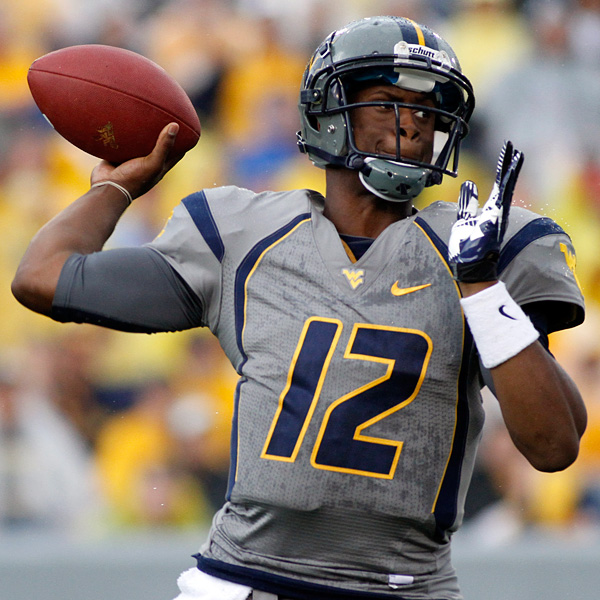
One of my favorite college football players is Geno Smith of West Virginia University. I have rarely seen a young athlete approach the game with more intelligence, intensity, and leadership.
Many people expected him to win college football’s highest honor, the Heisman trophy and perhaps be the first athlete picked up in the professional football draft last week.
It turns out, he wasn’t a contender for the Heisman honor and was not even the first player at his position to be chosen in the draft. Over the last six months, his stock has continued to slip among the professional football executives despite his breath-taking skills. Why?
Perhaps it is because he tweets too much.
The thrill of victory. The agony of de tweet.
Jason Cole of Yahoo! Sports reported that when Smith went on visits to prospective teams, rather than interact with coaches and front-office people who would be making the decision to hire (draft) him, he would spend much of his time by himself on his cell phone, texting friends and interacting with his Twitter stream.
One official said: “All these other players who were in there were talking to the coaches, trying to get to know people and he was over there by himself,” one of the sources said. “That’s not what you want out of your quarterback.”
Eventually Geno was drafted in the second round by the New York Jets, but his disconnected attitude may have cost him millions of dollars in salary, endorsements, and publicity as a first-round draft pick.
I have a friend who might actually lose his job over Twitter. He’s addicted to his Twitter stream and tweets constantly. His employer is upset about this habit and told him that he needs to concentrate at work. ”They just don’t understand me,” my friend lamented. “This is how I stay connected to my friends.”
A few weeks ago, I noticed that a well-known social media celebrity was tweeting and texting from a conference panel in front of a room filled with several hundred people. Instead of paying attention to the moderator and interacting with the other panelists, he disconnected from the conversation the entire time with his head down in his Twitter stream.
Be here now.
I imagine that some readers from Generation Text might be thinking “Who cares?”
Obviously the NFL team owners care. Even though Geno Smith is a remarkable talent, they wanted him to pay attention. I think that even in our text-frenzied world, it should be a priority to be present in the moment, to provide individual attention that communicates “I care about what is going on here, right now, instead of the action on my phone.”
I might not be an NFL team owner drafting a quarterback, but I have made a mental note to never hire or recommend that distracted social media celebrity panelist for a speaking engagement. There are a lot of choices out there. Being attentive and professional is important, even if you have loads of talent — as Geno found out.
Everything communicates. Everything becomes part of your personal brand … including how and when you use Twitter. Do you agree? Or, do you see expectations in the business world changing to conform to Generation Text?
Here’s why 100,000 people unfollowed me on Twitter
Apr 2nd
The other day, I was cleaning up my Twitter account and clicked on an analytics button that I had not used before. It showed me the number of people who had recently unfollowed me. What I saw made me gasp.
First, let’s state the obvious. No. I’m NOT going to tweet that.
Now, let’s put this situation in perspective. I currently have about 60,000 people following me on Twitter, all of them are real people to the best of my knowledge. These people found me and stuck with me over the last four years. This graphic implies that in just a few MONTHS nearly 100,000 people found me and dropped me.
My first reaction was “Whoa. Do I really suck that badly?” And your reaction is: “Yes, you really do.”
I know you don’t I?
The unfollow phenomenon
But of course I am not that sucky and neither are you. Nobody could possibly suck at Twitter so bad that 100,000 people followed and then dropped them moments later. Even Guy Kawasaki has kept people around his account while tweeting about socks and the sex life of plants. So, what is going on here?
There are a lot of people out there who are either gaming the system or just trying to look cool by getting lots of people to follow them while they follow few in return. They’re trying to look like a celebrity who is so in demand that they cannot keep up with their fans. Perhaps this pumps up a fragile ego or maybe makes them look cool for a job interview or something. They may even be employing automated programs to help them accomplish this.
It is rude and it is stupid. But apparently by the number I am showing here, there is just one ton of people trying to lure me into their ego trap.
I’ve had a couple of people ask me about this phenomenon, thinking that they were doing something wrong because so many people unfollow them so quickly. You’re not. It’s probably just spammers or people trying to look like a big shot.
But of course there is the possibility that you ARE legitimately losing followers, so let’s look at that, too.
The agony of delete
Maybe … just maybe … you are sucky at Twitter. So to find out, I asked my legitimate and wonderful Twitter followers to tell me why they unfollow people. I received so many great responses but they did fall into a few distinct categories. Here is a representative sample of responses (I edited slightly for punctuation and grammar)
Kevin Manne I may follow people for a specific event, and unfollow after the event ends when their posts aren’t as valuable to me anymore.
Kelli Schmith My “Twitter Why” has changed over the years (yes, years!). As ideas grow stale and overshared, I weed out the sources.
Brenda McDonald 5-10 posts in succession is too much when they are only posting for 10 minutes per day
Lois Martin My main reason to unfollow is when someone posts endless sales pitches.
Joe Kelly I unfollow when they repeat the same handful of tweets, over and over and over
Gina Schreck I always unfollow someone who is using TRUETWIT validation. I feel they are lazy for not checking people out themselves.
Allison Stoodley main reason is they complain too much, second, they disappear for months at a time.
Lori Wizdo I unfollow anyone too transparently promotional –even if the content is not that bad.
Ben Johnston I usually unfollow if their stream is nothing but RT’ing the same articles as everyone else is sharing
Marv Dorner Two reasons… dormant account for 90-120 days, or unacceptable posts (racists, vulgar, etc)
Jeff Machado I unfollow if they have shown no interest in interacting with me – if it’s obvious I’m just a number.
I think this gets down to a few “Maxims for Twitter Non-Suckiness”
1) Take control of your tribe and find/follow real people who will interact with you. It’s OK to give everybody a chance but you don’t have to follow spammy and rude people forever. Create your own experience.
2) Be kind and helpful. If you get into an argument, take it offline.
3) Share diverse, interesting content and try your best to space the tweets apart. Actually research shows an hour apart works pretty well.
4) Nothing says I love you like a RT now and then but add your own original content too.
5) I think this is most important — It’s OK to find business benefits through Twitter. But business comes through relationships. So focus on building relationships and making friends instead of selling your wares. Trust me. This really works.
And in introspection, I need to fine-tune my Twitter presence, too. The Twitter tribe has taught me something through this little exercise. I’m sure most of the 100,000 people who unfollowed me were not sincere but some of them are … and I could be doing a better job to respect my Twitter audience.
I want to end this post with an awesome quote from Twitter friend Timm McVaigh of Sydney wrote: “Twitter is a numbers game wrapped in a relationship.” I kind of like that.
What’s on your mind?
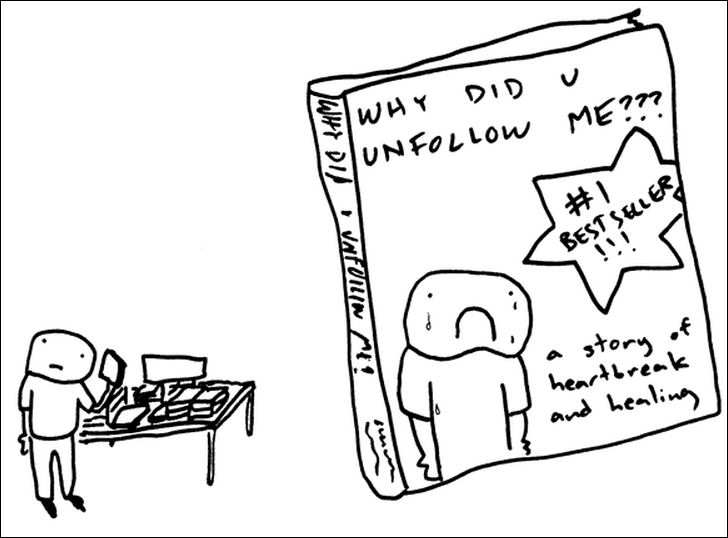
Illustration courtesy Toothpaste for Dinner
Twitter exec discusses new business advertising options (video)

Feb 21st
Click here if you can’t view this short video interview with Twitter’s Don O’Leary.
You need a score card to keep up with all the changes going on at Twitter.
A few months ago, I had the chance to meet Don O’Leary, who had just taken a new job growing Twitter’s commercial prospects in Europe.
With six months under his belt in the new job, I caught up with him again and asked him how businesses of any size — even solo entrepreneurs — can take advantage of some of the new advertising opportunities. He also discusses about the need to establish organic success before trying any advertising. Hope you enjoy this short video interview.
Click here to learn more about Twitter’s advertising options.
By the way, Don also told me that Twitter is growing very fast and is looking to fill many positions in Europe if you’re in the market!
Twitter through a fresh set of eyes
Nov 22nd
I’ve been very fortunate in that my book The Tao of Twitter is being used as a text in at least 40 universities and I recently had an interesting experience when I got to sit in on a class that had read and was discussing the book.
It was fun seeing Twitter again through the fresh eyes of these students. Here are excerpts from some of the student papers as they experienced Twitter for the first time. I also wanted to help them out by giving them some link love to their own student blogs so check ‘em out!
Ren Yi – “Mark Schaefer uses conversational tones and easy reading format to write the book, which makes it very easy to read, especially for someone whose first language is not English, just like me. In fact, I am very inspired by the book since I was not a big fan of social media before I took this social media class. I am definitely amazed by how business can be done and how professional relationships can be formed over Twitter and I hope I will accomplish those later. But now, the most important thing for me is to have a good start on the Twitter journey.
“The reason I wasn’t a big fan of social media is because I think the information on there is too personal and all about some random stuff. It never came to my attention that we should intentionally manage our accounts toward the professional direction. Now everything seems clear to me and that I should really post on a variety of topics which interest me and engage with people by reading and responding to other people’s posts.”
Morgan Neal – “I am mostly a self-taught Twitter user and the only part I have not used at all is the list feature of Twitter. I am still finding it daunting to even begin the list process. However, Tao of Twitter’s step-by-step guide and helpful hints on how to effectively use lists to boost followers and credibility as a “tweeter.” I am challenging myself to learn how to utilize this feature to provide more meaningful content to my followers.
“The part I enjoyed most was how Mark shows how his connections formed through social media and then how those connections built more connections that led to a job in Paris. Who knew?
“Although I still probably include too many personal tidbits, with The Tao of Twitter to go back to and reference I will be able to more effectively use it to network for my future career.”
Maggie Wallace – “I have been a regular user of Twitter for over three years now. However, it wasn’t until I read The Tao of Twitter that I realized the power and influence a person or a brand can gain by using Twitter.
“There were two particular phrases that stuck out to me: “Authentic Helpfulness and Meaningful Content.” While yes, a brand can use Twitter to gain followers, they will not see any return on their influence unless they use that account to connect with others on a personal level. Even simply “retweeting” a follower makes them feel more special and more connected to you.
“The anecdotes of authentic helpfulness Mark uses throughout the book are truly inspiring. Making one genuine connection through Twitter can cause a snowball effect and create strong personal and professional connections.”
Lauren Mackey — “The Tao of Twitter opened my eyes to something I had thought about, but was never able to put into words — The real purpose of Twitter. This helped me discover the reason why Twitter has become such a big part of my day — it is unlike any other platform in that users share constant, easy to read content with each other and connect with people all over the world.”
Meg Foster – “I will admit it: I have had trouble keeping up with my Twitter account. I always seem to be on Facebook, and Twitter is just something for me to pass the time while in line or some other event that requires waiting. I read the witty things other people have to say and I enjoy checking up on the news. But as far as my personal tweets go, I believe I have less than 50. And that includes the responses I have made to other people. I have trouble composing a tweet. Let me rephrase, I have trouble composing a tweet that other people care about.
“Although I may not be very good at it now, I believe that reading The Tao of Twitter was a huge step forward into the Twitter world. I feel that now that I have Schaefer’s insights, I will be more likely to use them in the upcoming weeks. Hopefully, these tips will help me feel more comfortable so that I am able to get my message out among all the clutter.”
Ashley Harris – “The Tao of Twitter changed my mentality and thought process. Now when I am on Twitter, I think about every message before I tweet it because I know that there could be a brand or company viewing me as a possible consumer or candidate. Therefore, watching what I tweet and tweeting valuable information can possibly benefit me and a potential company in my future.
“This has completely transformed my view about social media and how to use it to benefit myself as a potential employee to organizations in the future.”
Matthew Busby – “It took me a while to get into the Twitter scene because, like most people, I did not see the benefits of it. I was completely wrong. The main thing that I can take away from this book is that how different my mind set is about Twitter for my future career. I need to stop thinking like a college student and I need to begin to understand that what I follow and who follows me actually does matter.
“Since reading this book, I began to follow people who I deem important in the social media and advertising world. The main thing I have noticed is that those major companies and influencers will actually follow me back. I am able to see them and they are able to see me. These followers have also told me that my blog could be beneficial to my career if I keep it up. They are actually reading my content and the best part about it is that I am getting feedback from people who never knew I existed.”
Shannon Drew – “While reading The Tao of Twitter, I experienced a lot of “a-ha” moments. I had created a Twitter account about a year before I read the book and I never understood the appeal. When I sat down to read the book, I finally got it. Twitter is an excellent medium to connect with others from around the world. As short as 140 characters seems, Mark taught me that a tweet can convey so much meaning.
“Reading The Tao of Twitter is the reason I have immersed myself in this medium. I now understand the benefits I can receive from Twitter, and know that I have to put in some work in order to receive them!”
(Many thanks to Dr. Courtney Childers of The University of Tennessee for the assist with this article!)


You’re in marketing for one reason: Grow.
Grow your company, reputation, customers, impact, profits. Grow yourself. This is a community that will help. It will stretch your mind, connect you to fascinating people, and provide some fun along the way. I am so glad you’re here.
-Mark Schaefer