@markwschaefer
{grow}
  • Home
  • You
    • Are we a fit?
    • Reputation
  • Us
    • Mark W. Schaefer
    • Client List
  • Services
    • Consulting
    • Corporate Social Media Workshops
    • Social Media Strategy
    • Social Media Management
    • Speaking
    • Teaching
    • Instant Marketing Advice
  • Media & Publications
    • Mark Schaefer’s Books
    • Social Media From Scratch
    • Free Resources
  • {grow} Blog
  • Contact
    • Contact
    • Press Inquiries


Three dazzling examples that turned online influence into offline results

Apr 16th

Tweet

43 comments

paddle crew

Andre Niemeyer (second from left) and the paddle board crew.

There has been a lot of talk about finding powerful word of mouth influencers who can help your business. But once we have identified these influencers, what do we do about it?

Today, I’m going to dazzle you with three examples of people who are setting an awesome example in this area. But first, let me set the stage with a little diatribe about how almost everybody is doing it WRONG.

For some businesses, I have been designated as an “influencer.”  Tragically, none of these businesses sell beer, cars, or bacon, but that’s another story.

As an influencer, I am deluged with offers from urgent strangers through email and Twitter every day.  If this is your business strategy, here is the probability that I will connect with you and help you: ZERO. In fact, I won’t even open the email.

On the flip side, I will go out of my way to help friends who make an authentic attempt to relate to me as a person and build a relationship. It seems so simple, but 99% of the businesses out there are doing it wrong.

Here are three success stories that I hope will resonate with the thousands of companies out there trying to jump on the influencer bandwagon!

Mining the halls

Last year, a fellow literally came sprinting down a hallway at a conference where I was speaking. “Mark! Mark!” he said. “I just wanted to meet you and say hello. I am a big fan of your blog.”
We had a pleasant conversation and when he learned that I was visiting Europe soon, he invited me to have dinner with him in his hometown of Dublin. Which I did!

The dinner led to a tweet-up, the tweet-up led to significant new business opportunities, and the new opportunities led to new customers. For the fellow, I provided a free speaking engagement for him in Ireland, invited him to guest post on my blog, and he secured a coveted speaking slot at Social Slam a few weeks ago — his very first speaking opportunity in America.

Social Slam panel with Dino Dogan, Dawn DeVirgilio, Jennifer Kane and Ian Cleary in his American speaking debut.

Social Slam panel with Dino Dogan, Dawn DeVirgilio, Jennifer Kane and Ian Cleary in his American speaking debut.

You may recognize the now familiar name of Ian Cleary as the person I’m discussing.  But this was no isolated or random incident. Ian is a master of converting online relationships into powerful business benefits.

At the recent Social Media Marketing World event, I ran into Ian and asked him how many sessions he had attended and he said “none.” At first I was surprised.

“I’ve been in the hallways,” he said. “That’s where the conversations and relationships are taking place.”

Ian was working hard to turn the weak links of social media into the strong ties that convert into business opportunity. His personal brand is growing quickly through the effort he is putting into his new friendships.

“If there’s someone I really want to form a relationship with, I focus on how I can help them,” he said. “Everybody is looking for ways to USE the influencers but if you can turn this around and truly help them, that makes it much easier to build a relationship!”

Paddling his way to community engagement

One of the brightest and friendliest of my new connections is an entrepreneur named Andre Niemeyer.  Andre, who has been a member of the {grow} community for a couple years, immigrated from Brazil as a college student and has successfully carved  a niche for himself in the hyper-competitive digital marketing space in southern California.

andre niemeyerHe is talented of course, but I believe he stands out in his market through a heart that is authentically kind.

Before the San Diego Social Media Marketing World Conference, Andre put out a Facebook and LinkedIn message to all attendees: “If you’re coming in a day early, I would love to teach you how to paddle board. Would you like to try this with me?”

“They didn’t have to provide anything,” he said. “I had all the boards and paddles. Seven people turned out. We had a great time paddle boarding, which led to dinner and meaningful discussions. Although there were 1,000 people at the conference, every time we saw each other a smile came to my face and we would talk about the ‘paddle meeting.’ At a conference that large, social transactions often ring hollow. That paddle board group changed that for me and, I believe, the rest of the crew.

“Several members of the group described the activity as the highlight of their trip. I couldn’t be more humbled by that, since my purpose was to show some San Diego hospitality and offer an opportunity for more meaningful community building.”

Andre is authentically helpful and in a noisy world, people are attracted to that above anything, I think.

Awareness through conversation

While I was in California, I was invited to an “influencer dinner” at a well-known steakhouse sponsored by the company Sprinklr.  I was skeptical of being cornered into some kind of sales pitch but decided to attend because frankly, I like steak. Also, I like Jay Baer and I saw that he was attending so I thought, What the heck?  I perceived real potential value in the two hours of time this would take and decided to check it out.

New friends Liz Philips and Paola Elizaga at Sprinklr influencer event

New friends Liz Philips and Paola Elizaga at Sprinklr influencer event

It turned out to be a very valuable event. I had an amazing conversation with Intel’s Ekaterina Walter, became friends with Paolo Elizaga of P&G, and got to tap into the mighty brain of Lee Odden.

There was no sales pitch from Sprinklr. However this was a very effective influencer event because relationships with companies are formed through interactions over time. I got to meet the folks from the company and I have a positive feeling about the nice environment they created for a group of social media thought leaders. So now, this company is on my radar screen.

Am I willing to open an email from them? Yes.  And that is a big step forward, right?

The networking expert. Not.

Making personal connections that result in business benefits is a nuanced art. Here’s an example of influencer marketing that backfired.

While I was attending the conference in San Diego, I received a hand-written note under my door with some chocolates. The author of the note expressed a desire to meet me at the event.

I had no idea who this person was — had never even heard his name before.  I felt a little creeped out that a strange man had found my hotel room number and was sending me candy under the door.

It turns out that this fellow was a professional “networking expert.”

He eventually cornered me and asked if I could do a video interview for his site. I was happy to oblige but it became apparent that this fellow really knew nothing about me, nothing about my books, nothing about my business, and could not even put together a meaningful question to ask me. My perception is that the video was a ruse — like the candy — to provide some nominal value that would make me feel like I needed to reciprocate.  Sure enough, when the “interview” was over, he wanted to talk about “next steps.”  I left feeling disappointed and used.

The difference

Do you see a pattern in the successful interactions?

1) The social web is an amazing opportunity to create small interactions that lead to larger engagements — meaningful relationships and business opportunity.

2) Turning online connections to offline relationships transforms weak links into strong bonds.

3) Offer true helpfulness and real value.  Actionable relationships are earned, not bought. We’re not idiots. We know when we’re being used.

4) At the end of the day, we do business with people who we know and trust, not somebody who is trying to game us. Trust is paramount and needs to be at the foundation of your social networking strategy.

I believe social media (and specifically Twitter) is personal networking on steroids. But the basics remain the same. You still have to earn attention and trust to turn a weak link into a powerful one.

What do you think? How are you networking on the social web? Please add to the conversation!

andre niemeyer, ian cleary, personal branding, social influence, social influence marketing, social media networking

The future of business: Six layers of customer engagement

Apr 14th

Tweet

34 comments

six layers of customer engagement

Over the past few years I have been giving a speech about the “six layers” of customer engagement. It has been a hit with my audiences and it occurred to me that I have never shared this idea with you. So, let’s change that.

We are in the process of creating increasingly complex layers of digital distance between our companies and our customers. Mastering these six layers represent both enormous challenges and opportunities …

In the beginning

Historically, we dealt with customers face-to-face, with a trusted word and a firm handshake. Then in the late 1990s, with the creation of our first company websites, we took a one way ticket AWAY from these personal relationships and created the first, permanent digital divide between ourselves and our customers.

Year by year, this divide grew as companies found ways to cut costs and create customer delight by moving more and more self-service options to the web. We literally raced away from our personal relationships.

The second digital layer emerged just a few years ago as nerdy chat rooms bloomed into social networks. For many people, this became the preferred way to communicate, discover products and services, and connect with customer service. Time on websites went down, time on social sites exploded.

So for a business, we must now figure out how to connect with people in this new information eco-system and compel them to love us so much that they want to investigate our website, which is where the business takes place. After all this “socializing” we still need to get people to buy something right?

The third layer

The third layer is a social layer around all the other social platforms, and that is Facebook. You see, for many people today Facebook IS the Internet.

Yes, people love Flickr, but Facebook is the number one photo site in the world. We love YouTube, but millions of hours of YouTube videos are watched every day THROUGH Facebook. Does it seem like there is yet another layer going on here?  There is. Even if we do a great job populating the social web with our content, that content is increasingly viewed through Facebook. So, our businesses need to be there.

But we’re just getting started.

The mobile layer

Today, more than half of Facebook’s users access the site over a mobile device … and that is increasing month by month. So even if we have a great website, even if we are populating the social web and optimizing for Facebook, we now need to do it in a way that works on a screen that fits in the palm of your hand.

Mobile represents the fourth layer between our customers and the money we would like to liberate from their wallets.

All of this is probably familiar to you and your business is already implementing a web design that is responsive for mobile. If your head is spinning about the rate of change so far, you’re in for an even greater shock. We are on the cusp of the most rapid and disruptive technological change in history – augmented reality. There will be a digital layer over the “real world” and the Internet will surround us like the air that we breathe.

Now everything changes

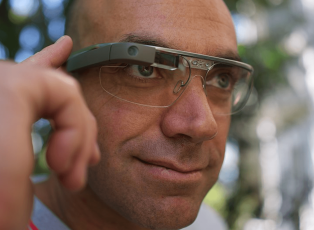
augmented reality customer serviceThe Google Glass project is just the first volley in a revolution that will change the way we connect, learn, shop, communicate, and entertain ourselves. In fact, it will touch almost everything in our daily lives.  It is not the new Internet. It will be something far more important and foundational — it will be more like the new electricity. The widespread adoption of augmented reality, first in glasses and then in contact lenses, will transform every way we connect and communicate. Your business will need to master this layer and all of its implications.

The virtual layer will liberate us from devices and open up dazzling new opportunities to create new businesses, new applications, new customer connections.

Now that we have a ubiquitous digital layer across the world, what do we do with it? Why, we have fun of course …

The sixth layer of engagement

People love to play games more than anything. The average World of Warcraft player spends six hours at the game. Wow. Six hours. Wow. What if a business could tap into just a little of that!

Smart businesses are trying to figure out how to do exactly that. There is a whole theory of game science that creates these addictions and it can certainly be applied to marketing.

Social, mobile, location, augmented reality … it all enables the game layer. Why not turn your customer engagements into a game with levels, achievements, and rewards? Today, the popular mantra is to create “utility.” But I think there is a limited amount of engagement a company can provide through some useful electronic connection. But there is no limit to the amount of fun that can be provided. We are a few years away from an economy based on fun.

data mining

Implications

If you think this through, and I hope you do, there are some important implications beyond the six layers:

1) Customers are going to leave a data trail on every level. The companies that can mine this stream will create powerful competitive advantage. That’s why, increasingly, marketing = math.

2) Not every customer will engage with you on every layer. That means your channel strategies are going to multiply.

3) With the premium on fun and entertainment, this means good news and rising rates for the best content creators and game developers.

4) Bring plenty of money. I don’t thing creating an augmented reality customer service department is going to be cheap.

5) For the companies that move first in these spaces there will be an unparalleled opportunity to create customer connection and loyalty.

Whew. Is your head ready to explode?

I would sincerely love your thoughts on this concept. What makes sense? What did I miss?

(Warning: shameless self-promotion ahead) If these ideas tantalize you, why not hire me to give you the full meal deal through a speech at your next company or industry conference? We’ll have a lot of fun with these ideas.

content marketing strategy, digital customer strategy, future of digital marketing, future of marketing, social media strategy

No horsing around. A {growtoon}.

Apr 12th

Tweet

3 comments

ford


Join the growtoonists each Friday for a humorous take on marketing, social media, and current business events.

Joey Strawn is a social media strategist who loves enjoying a good book and then drawing in it. Check him out on Twitter: @joey_strawn

joey strawn, social media cartoon, social media humor

How social media saved our church

Apr 11th

Tweet

12 comments

social media and the church

A few weeks ago I offered the opportunity to write a guest post (among other prizes!) as a tribute to everyone’s support for 1,000 blog posts here on {grow}. Happily, Judith Gotwald won the random drawing for the guest post and she offers this unique and instructional lesson about an organization in crisis and how social media saved it.

By Judith Gotwald, {grow} Community Member

I didn’t become a blogger until I had no choice. It was the only way I could help my church survive.

A journalist by training, I have worked in publishing as a graphic artist for 30 years—good basic credentials. I am not a pastor, just a church member. My church’s dire need pushed me into the blogging pool, really as an act of desperation. Here is my story.

The mainline Church is in trouble. Attendance, membership, and giving are spiraling downward. Societal changes have left the Church behind—or vice versa.

Most churches operate on subsistence budgets. There is little money for service or outreach. Regional and national hierarchies, once defining elements of religion, are now difficult for congregations to support.

Yet hierarchies like to survive.

Social Media is tailor-made for Church purposes. Imagine the ability to reach people worldwide for minimal investment! Yet most Church leaders avoid social media like the Egyptian plagues.

Facing significant decline, our regional body, the Southeastern Pennsylvania Synod of the Evangelical Lutheran Church in America, was routinely adopting deficit budgets, closing churches, and selling their property kept them afloat.

In 2007, my church, Redeemer Lutheran Church in Philadelphia was on the hitlist — the first of six targets identified by a newly-elected bishop. We owned prime real estate in a desirable neighborhood, had a small endowment, were debt-free, self-sufficient — and growing. Nevertheless, we were going to be shuttered and in this David and Goliath scenario, Goliath was the odds-on favorite.

The doors are closed

Our bishop appeared one Sunday at our doorstep with a locksmith, expecting us to hand over our $2 million-property upon demand. When we resisted, lawsuits naming individual church members ensured that many would skedaddle. Pastors led the retreat.

But this time David fought back.

It wasn’t easy. Through several years of legal challenges, courts ruled (never hearing the case) that they had no jurisdiction in church affairs. The First Amendment puts the Church above its own laws. Our property and money were confiscated.  We were on our own.

In February 2011, Redeemer asked me to launch a congregational blog — 2x2virtualchurch.com – to keep the remnants of our congregation connected.  I armed myself with a copy of Teaching Yourself Visually WordPress, and spent a few days pulling out my hair. Things finally clicked.

In our first month of operation we had exactly one visitor to our site, and then a few more each month.  I started to study to be a better blogger, following the advice of Social Media Examiner, Hubspot and veteran bloggers.

Content was posted daily. Traffic began to grow.

We wanted our blog to tell our story, but we also wanted to be a church — to serve. We focused on what we know best—small church ministry.

  • Earliest posts chronicled our social media journey.
  • Many of our new members were recent immigrants. This became a series on multicultural ministry.
  • General church issues are explored.
  • Resources geared to small congregations are featured twice a week.
  • The {grow} blog inspired the use of graphics and cartoons.

New doors are opened

This content actually began to drive significant traffic and shape our ministry. An original Easter play was downloaded 150 times when we posted it in 2012 and already 3,100 times in 2013.

Our little church blog began to attract a global audience. A mission in Pakistan shared their fear with us as violence erupted following the anti-Islam video that was posted a few months ago. Churches in Kenya sent us photos of the AIDS/war orphans they serve. Prayer and encouragement continue to fly back and forth across cyberspace. Our members know each other by name.

One day, a pastor in Pakistan asked to be connected to churches in Kenya. Within a few weeks, three churches from two countries and cultures that met through the blog were together in Kenya!

Before the opportunity of social media, this type of mission influence would take years and require coordination of an expensive national office. Two common denominators — the predominant use of English and the Internet — have placed mission work directly in the hands of congregations.

Our regional body justified their land grab by claiming Redeemer was too small to fulfill a mission purpose. Well, we no longer had our land, but with a blog, our mission is extending to every corner of the earth. Even the national megachurches have noted our effectiveness.

Our following is growing and with a demographic the mainline church has a difficult time reaching — young adults.

How does our ministry compare with the ministries of 160 churches who collectively claimed our property?

The largest church in our region has an average Sunday morning attendance of 725 (down from 1324 in 2002). Most churches are much smaller with fewer than 100 in weekly worship.

Redeemer had 72 members when the conflict started with an average weekly attendance below 30. We now have 1300 unique weekly visitors and are adding a few hundred each week at our current pace. An additional 200 subscribe to our daily mesages. The numbers are small by corporate standards but huge in the world of Church.

The reach of Redeemer is greater than any other congregation in the regional denomination that evicted us. The structure of “church” has been turned upside down.

So with this proven success, why do churches still generally avoid the use of social media?

  • Most don’t know how to start.
  • Church leaders tend to represent an older demographic.
  • Tradition prefers failure to innovation.

Redeemer, through our social media outreach, has proved that there is more economic potential in an open church than a closed church. Social Media made all the difference.

judith gotwaldJudith Gotwald owns and operates Gotwald Creation, a communications design company in Philadelphia. Two books—one on social media and the church and one on branding for evangelism—will be available by Fall 2013. Follow her on Twitter @jigotwald and @2x2Foundation.

Illustration by the author.

Related Posts Plugin for WordPress, Blogger...
judith gotwald, social media and mission work, social media and religion, social media and the church
« First...«56789»102030...Last »
  • Subscribe to {Grow}

    Enter your Email
  • Welcome to {grow}

    You’re in marketing for one reason: Grow. Grow your company, reputation, customers, impact, profits. Grow yourself. This is a community that will help. It will stretch your mind, connect you to fascinating people, and provide some fun along the way. I am so glad you’re here. -Mark Schaefer
  • Follow Mark

    Follow Us on FacebookFollow Us on Google+Follow Us on TwitterFollow Us on LinkedInFollow Us on YouTubeFollow Us on RSS
  • Book Mark to Speak!

  • Groups We Believe In

  • Search

  • Categories

  • The Archives

    •  2013 (105)
      • May (14)
      • April (21)
      • March (24)
      • February (21)
      • January (25)
    •  2012 (281)
      • December (20)
      • November (22)
      • October (23)
      • September (22)
      • August (25)
      • July (24)
      • June (25)
      • May (25)
      • April (21)
      • March (25)
      • February (23)
      • January (26)
    •  2011 (274)
      • December (24)
      • November (22)
      • October (20)
      • September (25)
      • August (25)
      • July (21)
      • June (27)
      • May (27)
      • April (20)
      • March (23)
      • February (24)
      • January (16)
    •  2010 (222)
      • December (18)
      • November (17)
      • October (19)
      • September (19)
      • August (17)
      • July (17)
      • June (15)
      • May (18)
      • April (19)
      • March (21)
      • February (24)
      • January (18)
    •  2009 (190)
      • December (21)
      • November (17)
      • October (22)
      • September (21)
      • August (27)
      • July (30)
      • June (15)
      • May (26)
      • April (11)
RSS Feeds
Top | Copyright © 2013 Schaefer Marketing Solutions: We Help Businesses {grow}